July 31, 2026 · Michael Rodriguez
Examining AI for After-Hours Emergency Calls in Home Services
Can AI manage after-hours emergency calls for home service businesses? We explore the capabilities and limitations for critical customer service.
The short answer
What is an "emergency" in home services, anyway?
An emergency in home services typically refers to a situation requiring immediate attention to prevent significant property damage, health risks, or major disruption to essential services. This could range from a burst pipe flooding a basement, a complete power outage, a furnace failure in winter, or an AC breakdown in extreme heat. The severity and urgency often dictate whether a call is classified as an emergency.
Definition
After-Hours Emergency Dispatch: The process of managing and responding to urgent service requests that occur outside of standard business operating hours, often requiring on-call technicians and specialized protocols.
Defining what truly constitutes an emergency is often the first hurdle for any dispatch system, human or AI. What one homeowner considers an emergency, another might see as an inconvenience. For instance, a leaky faucet is generally not an emergency, but a pipe burst flooding a kitchen certainly is.
"The real challenge with AI in emergency calls isn't just understanding words, it's understanding the unspoken urgency and fear."
How can AI assist with emergency calls without taking them fully?
AI can play a supportive, yet critical, role in managing after-hours emergency calls by automating initial stages and enhancing human dispatcher capabilities. This approach focuses on offloading repetitive tasks and providing valuable data.
One primary way AI assists is through intelligent call routing. When a customer calls after hours, AI can analyze keywords, urgency signals, and customer history to determine the nature of the emergency. For example, if a customer repeatedly mentions "water everywhere" or "no heat," the AI can prioritize that call and route it to the appropriate on-call human dispatcher or technician. This reduces the time a caller might spend navigating menus or waiting for a human to assess the situation.
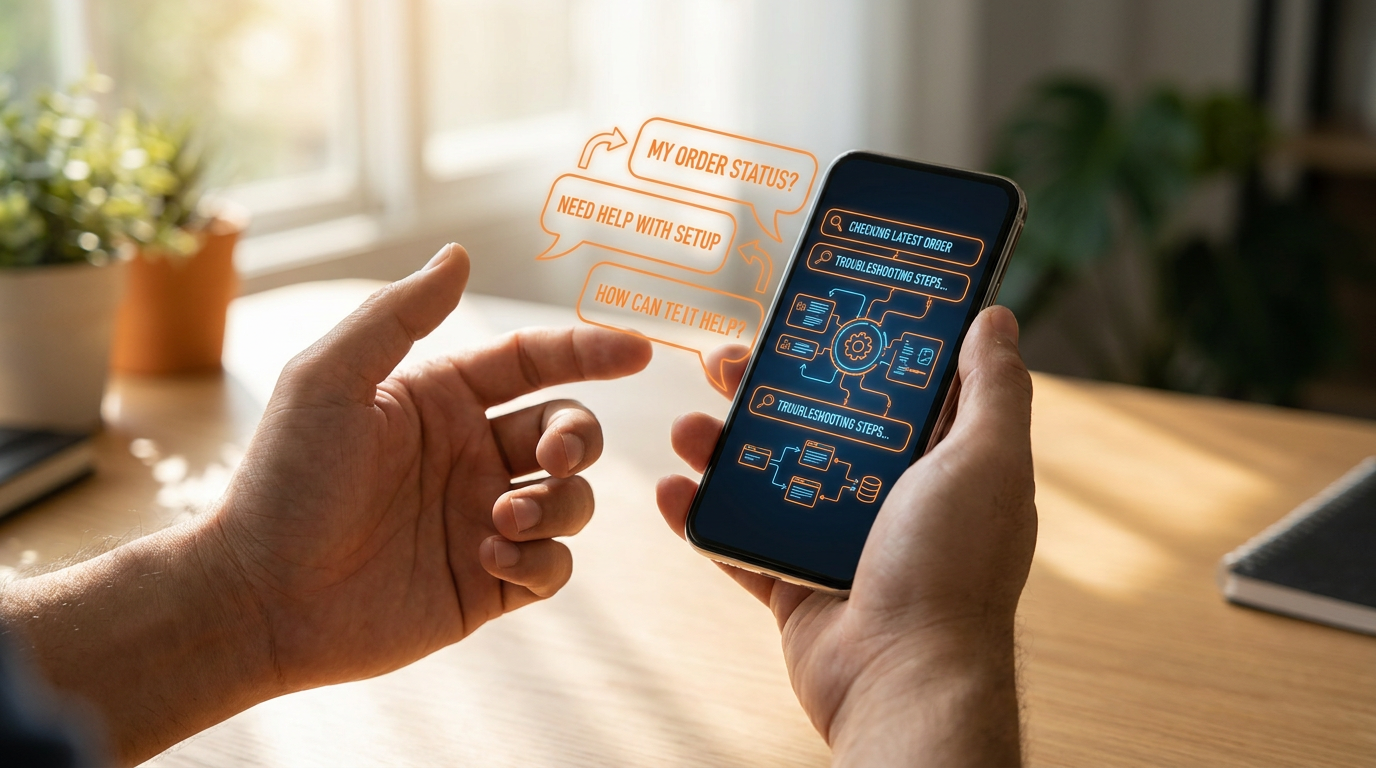
Another assist comes in information gathering. AI-powered chatbots or voice assistants can collect vital information from callers while human dispatchers are occupied. This includes the caller's name, address, phone number, a detailed description of the problem, and any specific concerns. This data can then be presented to the human dispatcher, allowing them to quickly grasp the situation before even speaking to the customer. This efficiency gain is significant, especially during peak emergency times.
Basic troubleshooting and advice are also within AI's current capabilities. For common service issues with straightforward solutions, AI can offer self-help steps. For instance, if a customer calls about a tripped circuit breaker, the AI could guide them through basic reset procedures. While this won't solve all problems, it can resolve minor issues without needing human intervention, freeing up dispatchers for more complex situations. Critically, AI should be programmed to recognize when it cannot resolve an issue and seamlessly hand off to a human.
Note
Moreover, AI can serve as a powerful tool for documentation. Every interaction, every piece of information collected, can be logged and transcribed, creating a comprehensive record of the emergency call. This record is invaluable for follow-up, compliance, and even training purposes. For home service businesses looking to improve their efficiency, solutions like automated call booking and CRM integration can streamline this process.
What are the limitations or risks of AI handling emergencies autonomously?
While AI offers compelling advantages, relying on it to fully handle after-hours emergency calls autonomously carries substantial risks and exposes significant limitations in current technology.
Nuance and Emotional Intelligence
AI struggles profoundly with nuance, empathy, and emotional intelligence. An emergency caller might be panicked, distressed, or even in danger. A human dispatcher can detect subtle cues in tone of voice, hesitations, or choice of words that indicate the true severity of a situation, even when the caller is unable to articulate it clearly. AI's current inability to truly understand the emotional state of a caller means it might misinterpret urgency, dismiss critical underlying problems, or fail to provide the necessary reassurance.
Unpredictability of Emergencies
Emergencies in home services are inherently unpredictable. They often involve unique combinations of factors, unexpected complications, and require creative problem-solving. AI operates based on programmed rules and trained data. If a scenario falls outside its training set, it can fail spectacularly. A human dispatcher can adapt, ask probing questions, make judgment calls based on limited information, and even improvise solutions or coordinate with multiple parties in real-time. AI is not yet adept at this dynamic, unstructured problem-solving.
Accountability and Liability
Who is accountable if an AI misdiagnoses an emergency, routes it incorrectly, or fails to dispatch a technician, leading to significant property damage or harm? The legal and ethical implications of autonomous AI making critical decisions in high-stakes situations are complex and largely unresolved. Businesses implementing such systems would face immense liability, underscoring the need for human oversight and ultimate responsibility. For more on managing inbound leads, visit our discovery page.
Technical Failures and Cybersecurity
AI systems, like any technology, are susceptible to technical glitches, software bugs, or cybersecurity breaches. A system malfunction during an emergency could have disastrous consequences. Imagine an AI system going offline during a major storm, leaving customers unable to report emergencies. The reliability and resilience of autonomous AI in critical infrastructure roles demand an exceptionally high, and currently unproven, standard.

What's the best hybrid approach for home service businesses?
The most effective strategy for home service businesses is a hybrid model that leverages AI's strengths while retaining human expertise for critical decision-making and empathetic interaction. This approach optimizes efficiency and maintains a high standard of customer service, particularly during challenging after-hours scenarios.
Here's how a hybrid model can work:
-
AI as the First Line of Contact: When an after-hours emergency call comes in, an AI-powered voice assistant or chatbot can be the first point of contact. Its role is to quickly gather essential information: caller's name, address, contact details, and a brief description of the issue. The AI can also perform initial categorization, distinguishing between non-urgent inquiries and potential emergencies.
-
Intelligent Triage and Prioritization: Based on keyword analysis and pre-defined rules, the AI can then triage the call. Highly urgent keywords (e.g., "burst pipe," "fumes," "no heat freezing") would immediately flag the call as a high priority. Less urgent keywords (e.g., "slow leak," "noisy unit") would be categorized lower.
-
Human Dispatcher Handoff for Emergencies: Crucially, for anything classified as an emergency, the AI should seamlessly hand off the call to a human on-call dispatcher. The dispatcher receives all the information gathered by the AI, saving valuable time. This allows the human to immediately focus on understanding the nuanced details, assessing the caller's emotional state, and making informed decisions about dispatching a technician. The National Fire Protection Association (NFPA) emphasizes the critical role of human dispatchers in emergency response for their ability to handle dynamic situations and provide pre-arrival instructions. See their resources on emergency communications for more.
-
AI for Non-Emergency Call Management: For callers whose issues are deemed non-emergencies by the AI (after potentially offering some basic troubleshooting steps), the AI can manage these queries by scheduling a call-back for regular business hours, directing them to online resources, or booking an appointment for the next available slot. This prevents non-critical calls from overwhelming on-call staff.
-
Continuous Learning and Improvement: The human dispatchers provide feedback to the AI system. This feedback loop is essential for the AI to learn from real-world emergency scenarios, improving its diagnostic accuracy and routing capabilities over time. Every interaction refines the AI's understanding, making it more effective at supporting human operations.
This hybrid approach maximizes efficiency by automating predictable tasks, while reserving the invaluable human capabilities of judgment, empathy, and complex problem-solving for the situations that truly demand them.
What should a home service business look for in hybrid AI tools?
When evaluating hybrid AI tools for after-hours emergency calls, home service businesses should prioritize several key features to ensure effective and reliable operation.
First, look for seamless human-AI handoff capabilities. The system must be able to gracefully transfer a call or chat session from AI to a human dispatcher without causing frustration or requiring the customer to repeat information. This includes passing along the full transcript of the AI interaction.
Second, customizable emergency definitions and routing logic are essential. Your business has unique criteria for what constitutes an emergency. The AI system should allow you to easily configure keywords, phrases, and scenarios that trigger an emergency classification and dictate specific routing protocols.
Third, robust integration with existing CRM and dispatch systems is critical. The AI should be able to pull customer history, property information, and service agreements from your CRM. It should also be able to push newly gathered data or even dispatch requests directly into your field service management software. Without this integration, the AI becomes an isolated tool, adding more manual steps rather than reducing them. Learn more about powerful integrations at our contact page.
Fourth, detailed analytics and reporting are vital for continuous improvement. The tool should provide insights into call volumes, emergency types, AI accuracy rates, human handoff rates, and customer satisfaction regarding the AI interaction. This data helps you refine the AI's programming and optimize your emergency response protocols. Review case studies and whitepapers from reputable AI providers to understand their data capabilities; for example, see how companies are using AI in customer service as described by Harvard Business Review.
Finally, consider scalability and reliability. The system should be able to handle fluctuating call volumes during peak emergency periods (e.g., major weather events) without performance degradation. It also needs strong security measures to protect sensitive customer data and ensure continuous operation. Investing in a system that can grow with your business and provide consistent uptime is paramount.
By focusing on these features, home service businesses can implement AI tools that genuinely enhance their after-hours emergency response, supporting their human teams, and ultimately providing better service to their customers.
Key Takeaways
AI excels at initial information gathering, intelligent routing, and basic troubleshooting for after-hours calls, improving efficiency.
Autonomous AI faces significant limitations in handling complex, nuanced, and emotionally charged emergencies due to lack of judgment and empathy.
A hybrid model, where AI triages and collects data, then seamlessly hands off critical emergencies to human dispatchers, is the most effective approach.
Look for AI tools with seamless human-AI handoff, customizable routing, CRM integration, and strong analytics for continuous improvement.
See what this looks like for your shop.
The AI Phone Guy answers every call, qualifies the lead, books the job, and texts you the details, day and night. Book a quick discovery call and we will walk through your numbers together.