
July 14, 2026 · Michael Rodriguez
What Happens to Calls That Come In After Hours or on Weekends?
The calls that come in after your team clocks out are some of the most valuable calls you get, and most of them vanish. Here is exactly what happens to an after-hours or weekend call, where the job actually goes, and the honest way to stop losing them, from one trade operator to another.
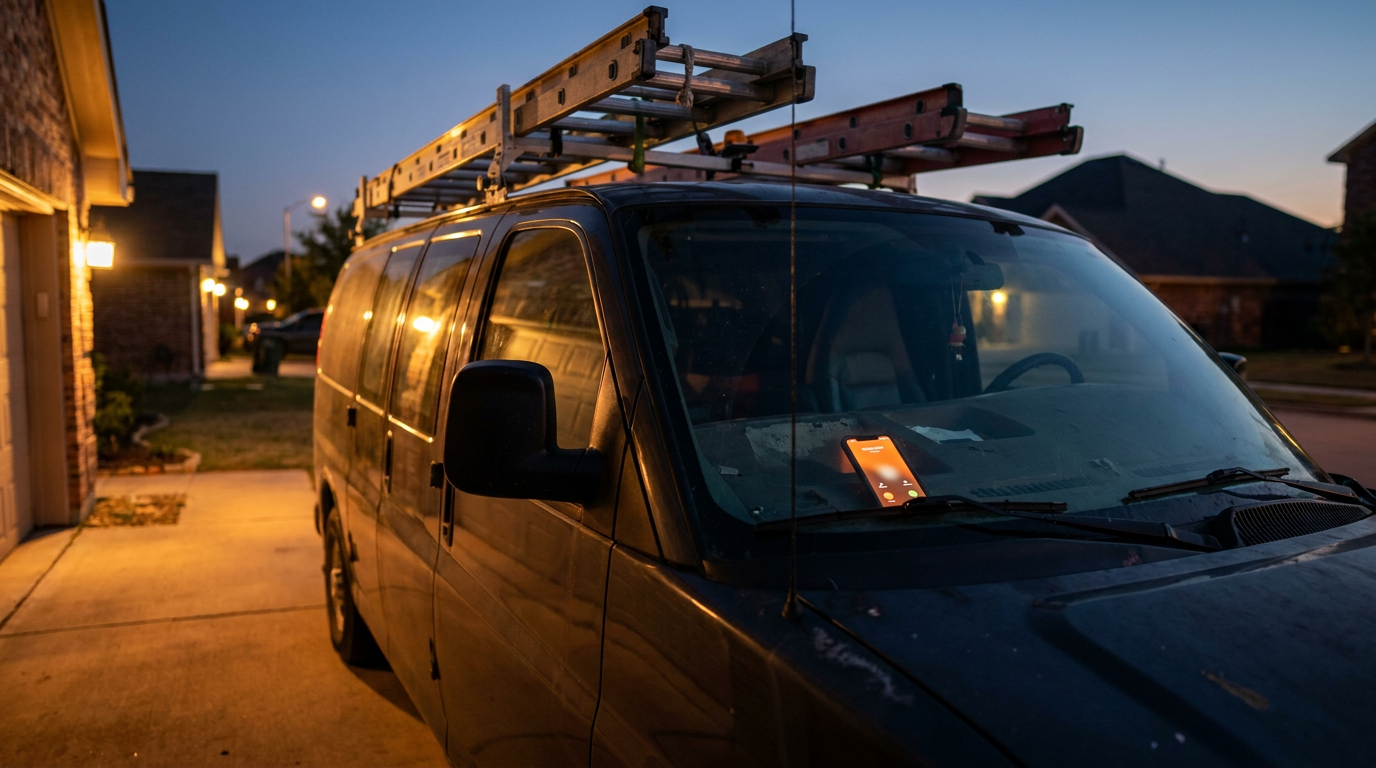
If a customer calls your shop at 9pm on a Tuesday or on a Sunday afternoon, here is what almost always happens: the call rolls to voicemail or rings out, the caller hangs up without leaving a message, and they dial the next business on their list. Nights and weekends are when some of your most urgent, ready-to-book calls come in, and they are also the hours your phone is least likely to be covered. So the job does not disappear. It just goes to whoever picks up. Here is exactly what happens to those calls, and the honest way to stop handing them away.
The short answer
When a call comes in after hours or on a weekend, it almost always does one of two things: it rolls to voicemail, or it rings out and the caller hangs up. Either way, the caller rarely waits around. Fewer than 3% of people sent to voicemail leave a message, so the rest hang up and call the next business. Because there is usually no team behind the phone on nights and weekends, an after-hours call that nobody answers is, in practice, a job handed straight to your competitor. The fix is not a bigger ad budget, it is making sure the phone gets answered when your team can't get to it.
Definition
After-hours and weekend call coverage:
The system a business uses to answer, qualify, and book inbound calls that arrive outside normal working hours, on nights, weekends, and holidays, when the team is off the clock. Good coverage means a caller who dials at 9pm or on a Saturday still reaches something that responds, gets their questions answered, and can book a job, instead of hitting voicemail or a phone that rings out.
What actually happens to an after-hours call, step by step?
It follows a short, predictable path, and almost none of it ends with you getting the job. Once you see the path laid out, it is obvious why so much slips through at night. Here is the walk from the customer's ring to the outcome.
The customer dials with a real problem and real intent. Your team is home, asleep, or off for the weekend, so there is no one to pick up. The call rolls to voicemail or just rings until they give up. Almost nobody leaves a message. And then, because their problem has not gone away, they scroll down and call the next name they see.
Source: Invoca, "How Much Do Missed Sales Calls Cost Home Services Businesses?" (2024)
Sit with that number for a second. If fewer than 3 in 100 people leave a voicemail, then your voicemail box is not catching your after-hours calls. It is quietly losing them. You wake up Monday to an empty voicemail box and think it was a slow weekend, when really the phone rang and the calls walked. The empty box is not proof nobody called. It is proof the people who called did not wait around for a machine.
Do customers really call after 5pm and on weekends?
Yes, and those are often your most valuable calls, not your least. This is the part owners underestimate the most. The instinct is that after hours means slow, low-priority stuff. In home services it is usually the opposite: nights and weekends are when the urgent, high-intent work comes in.
Think about what actually breaks after 5pm. A furnace quits on a cold night. A water heater lets go on a Saturday. The AC dies during a Texas July weekend and the house is 90 degrees by noon. In a DFW suburb like Frisco or Mansfield, that homeowner is not casually shopping. They have a problem right now and they are calling down a list until somebody answers.
Why after-hours calls are worth more, not less
A daytime call might be a quote request or a routine tune-up. An after-hours call is far more likely to be an emergency, a customer who needs help immediately and is ready to book the first shop that picks up. Higher urgency means higher intent, and higher intent means a call that is much more likely to turn into a paying job, if someone answers it.
These callers are not price shopping and they are not comparing five estimates. They want the first competent business that picks up the phone. That is exactly why the shop that covers nights and weekends wins so much of this work by default, not because they are cheaper or better, but because they were simply there to answer.
Where does the job actually go when I don't pick up?
To the next business on the list, and usually the very next one. This is the part that stings, because it is not that the customer decided against the work. They still need it done. They just gave it to someone who was reachable.
Source: Vendasta, "Why Lead Response Time Matters" (citing Lead Connect survey)
That is the whole game on nights and weekends. When a customer has an urgent problem and calls three shops, the one that answers first almost always gets the job, regardless of who has the nicer truck or the lower price. After hours, "responds first" usually just means "the only one who answered at all." If your phone rolled to voicemail and the next shop's got picked up, you were never really in the running.
It is worth being honest about the scale of this. More than a quarter of calls to home-services businesses go unanswered across the board, and a big share of those cluster in the exact hours nobody is manning the phone.
Source: Invoca, "How Much Do Missed Sales Calls Cost Home Services Businesses?" (2024)
Voicemail, an answering service, or an AI: which one actually catches these calls?
They are not equal, and the difference shows up entirely in whether the job gets booked or just written down. Voicemail loses almost everyone. A live answering service catches the call but usually just takes a message. An AI setup answers, qualifies, and books around the clock. Here is the honest comparison.
| After-hours option | Answers the call? | What the caller gets | What you get Monday |
|---|---|---|---|
| Voicemail | No, machine only | A beep and a request to leave a message most won't leave | An empty or near-empty box, no idea who called |
| Live answering service | Yes, during covered hours | A person who takes a message or basic info | A stack of callbacks to chase, jobs often already gone |
| AI after-hours answering | Yes, every hour, first ring | Questions answered and the job booked on the spot | Appointments already on your calendar, texted to you |
The gap between them is not about being fancy. It is about what the customer experiences at 9pm. Voicemail asks a stressed-out caller to talk to a machine, so they hang up. A message-only service means you are still calling people back the next morning, by which point the fast competitor already ran the job. Something that can actually book the appointment while the customer is on the line is the only option that turns the after-hours call into work on your calendar instead of a name on a callback list.
On a night or weekend call, "responds first" usually just means "answered at all." Everyone else is asleep.
Here is a simple way to feel the whole thing for yourself, and it takes two minutes. The best test is to become your own after-hours customer.
- Grab a second phone and call your business line after 8pm.
- Do not answer it. Let it do whatever it does for a real caller.
- Count the rings, and notice whether it rolls to voicemail, rings out, or drops.
- Ask yourself: if I were a homeowner with a burst pipe right now, would I wait, or call the next shop?
- Run the same test on a Sunday. That is when a lot of this work comes in.
Most owners who run that test are surprised, and not in a good way. The phone they assumed was "handled" after hours is quietly sending their best emergency calls to voicemail. We walked through how to pull your own real numbers in how to find your own missed-call number in a few minutes, and the deeper cost of it in how much one missed call actually costs your shop.
What does covering nights and weekends actually cost me if I don't fix it?
More than most owners guess, because it is the highest-intent calls leaking out the worst-covered hours. It is genuinely just math, so let me show it with round numbers.
Say a DFW shop gets 15 after-hours and weekend calls in a normal week that nobody answers. That is roughly 60 a month. If even a third of those callers would have booked at an average job value of $400, that is 20 jobs and about $8,000 walking out the door every month, almost entirely to the competitor who happened to pick up. These numbers are illustrative, not a promise, and yours will be different. The point is the method, not the figure: your real after-hours volume, your real close rate, your real ticket.
The reason after-hours calls leak so badly is not that they are rare or low-value. It is the opposite: they are urgent, high-intent, ready-to-book calls arriving in the exact hours your phone has no one behind it. Cover those hours and you are catching your best calls, not your leftovers.
The fix is not working yourself to death answering your cell at midnight, and it is not a bigger ad budget that just buys more calls to miss. It is putting something on the phone that answers when your team can't get to it, qualifies the caller, and books the job, day or night, so the calls you are losing turn back into appointments on your calendar instead of your competitor's.
The cleanest way to see how that works is to hear it. Call the live line at (817) 670-9689 right now, tonight, this weekend, any hour, and listen to The AI Phone Guy answer, qualify, and book exactly the way it would for your shop. That call is the whole demo, no sign-up and no pitch. Then see how the after-hours coverage actually works, or book a free Missed-Call Strategy Session and we will pull your own numbers together, the calls you get after hours, the ones you miss, and what catching them is worth. If you would rather just ask a question first, reach out here and I will give you a straight answer.
Frequently asked questions
What happens to a call that comes in after hours or on a weekend?
Almost always one of two things: it rolls to voicemail, or it rings out and the caller hangs up. Either way the caller rarely waits. Fewer than 3% of people sent to voicemail leave a message, so the rest hang up and dial the next business on their list. On nights and weekends there is usually no team behind the phone to catch it, so an after-hours call that nobody answers is, in practice, a job handed to your competitor.
Do home-service customers actually call after 5pm and on weekends?
Yes, and often it is the most urgent work. A no-heat call at 8pm, a burst pipe on a Sunday, or a dead AC in July is a customer who needs help right now and is ready to book on the spot. Those callers are not price shopping, they are looking for the first shop that picks up. That makes nights and weekends some of your highest-intent calls, and the hours your phone is least likely to be covered.
Should after-hours calls go to voicemail, an answering service, or an AI?
Voicemail loses almost all of them because most callers never leave a message. A live answering service can catch calls but usually just takes a message and hands it back to you, which still leaves the booking for the morning. An AI setup answers on the first ring, qualifies the caller, and books the job around the clock, so the urgent 9pm call turns into an appointment instead of a message you return after your competitor already ran it.
How do I stop losing weekend and after-hours jobs to competitors?
Put something on the phone that answers when your team can't, every hour of every day. The fix is not a bigger ad budget or working yourself to the bone. It is making sure that when a ready-to-book customer calls at 9pm or on a Saturday, the phone gets answered, the caller gets qualified, and the job gets booked before they move on to the next name on Google.
Sources
- Invoca, "How Much Do Missed Sales Calls Cost Home Services Businesses?" (2024). invoca.com
- Vendasta, "Why Lead Response Time Matters" (citing a Lead Connect survey). vendasta.com
See what this looks like for your shop.
The AI Phone Guy answers every call, qualifies the lead, books the job, and texts you the details, day and night. Book a quick discovery call and we will walk through your numbers together.