
September 21, 2026 · Michael Rodriguez
Does AI Answering Work for Appliance-Repair Shops?
Straight talk on whether AI phone answering actually fits appliance-repair businesses, what it handles well, and where it still falls short.
The short answer
Definition
AI Phone Answering: An automated system that uses voice-based artificial intelligence to answer inbound calls, collect caller information, answer common questions, and route or book appointments, without a human picking up the phone.
Why do appliance-repair shops lose so many calls in the first place?
Most one- to three-tech shops run lean. The owner is pulling a compressor or driving between jobs, and nobody is sitting at a desk waiting for the phone to ring. Calls go to voicemail, callers hang up, and the job goes to whoever answered at the competitor down the street.
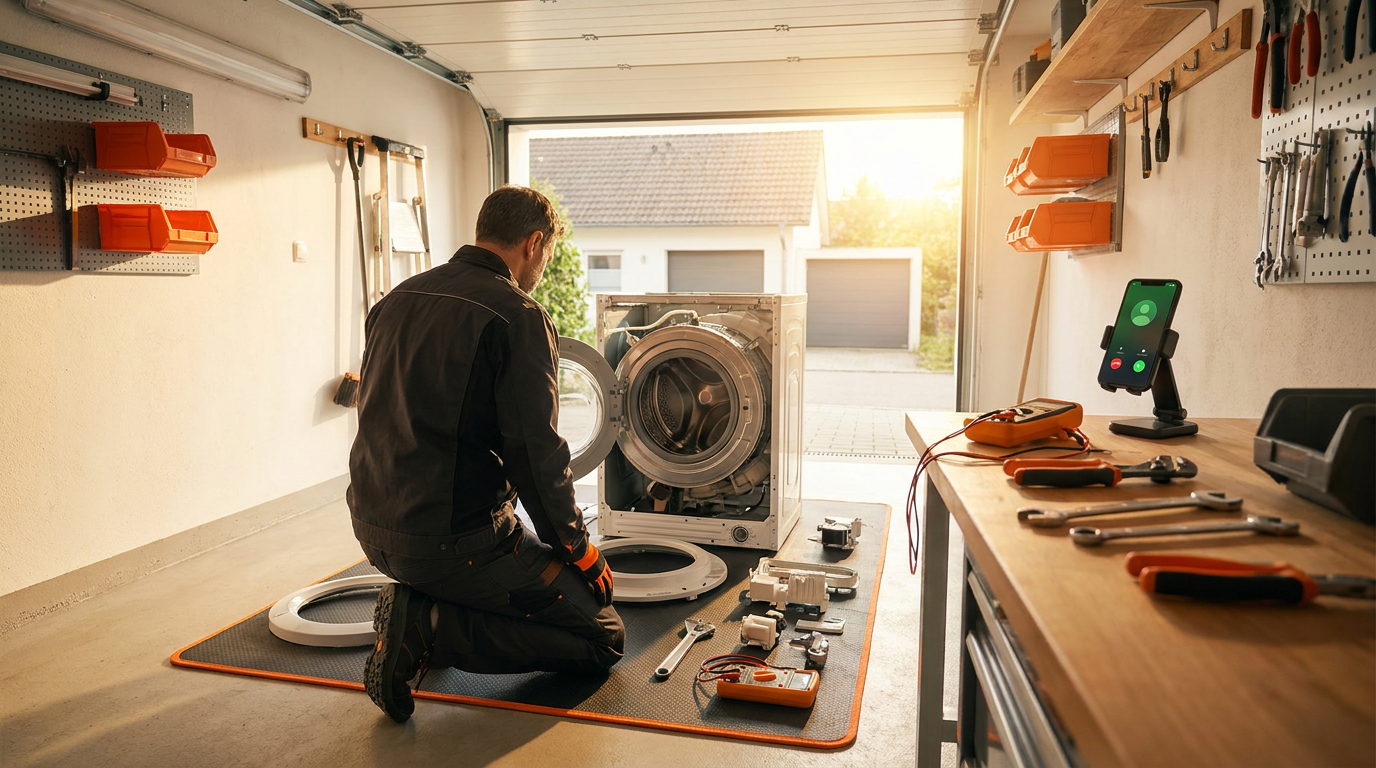
According to research published by Google and Ipsos, 60 percent of customers prefer to call a local service business directly rather than submit a web form. If that call goes unanswered, most of them do not leave a voicemail and try again later. They call the next result on the list. For appliance repair, where the customer already has a broken freezer full of food, the urgency is real and the patience is short.
Source: Google and Ipsos, 2019
What does AI answering actually do on an appliance-repair call?
A well-configured AI answering system does several things that directly fit how appliance-repair inquiries work.
- Collects appliance details up front. It can ask the caller what brand and model they have, what symptom they are seeing, and how old the unit is. That information goes into your scheduling software so the tech shows up prepared.
- Screens for obvious non-starters. If a caller describes a unit that is 20 years old and completely dead, the system can flag it as a possible replacement conversation rather than a repair job, saving a wasted truck roll.
- Books appointments around your availability. Connected to your calendar, it can offer real time slots and confirm them without a back-and-forth text chain.
- Handles repeat callers. Warranty callbacks, parts-arrival notifications, and reschedule requests are all high-volume, low-complexity calls that a trained AI handles cleanly.
- Works nights and weekends. Refrigerators break on Saturday afternoon. An AI system answers that call and locks in Monday morning before a competitor even opens.
Note
How does AI answering compare to a live receptionist for this trade?
For a small appliance-repair shop, a full-time receptionist is rarely affordable. The real comparison is between AI answering and a combination of voicemail, callback tags in your CRM, and occasional answering by whoever is available. Against that baseline, AI answering wins on speed and consistency.
A broken refrigerator is not a problem a homeowner wants to schedule around your voicemail. The shop that answers first almost always gets the job.
Against a trained, experienced human receptionist who knows your parts catalog and your tech schedules, AI is still catching up on nuance. But most shops are not choosing between AI and a great receptionist. They are choosing between AI and nobody.
What kinds of calls still need a human?
Being straight with you: AI answering has real limits in appliance repair.
Parts and labor disputes. When a customer calls upset about a bill or questions why a part cost what it did, that conversation needs judgment, empathy, and your shop's authority to make a decision. An AI should flag these and route them immediately.
Commercial accounts and property managers. If you service laundromats or apartment complexes, those accounts often have specific pricing agreements and relationship dynamics that require a person.
Diagnosis callbacks. After a tech has assessed a unit and the customer has questions about whether to repair or replace, that is a consultative conversation. AI can take a message, but it should not try to answer.
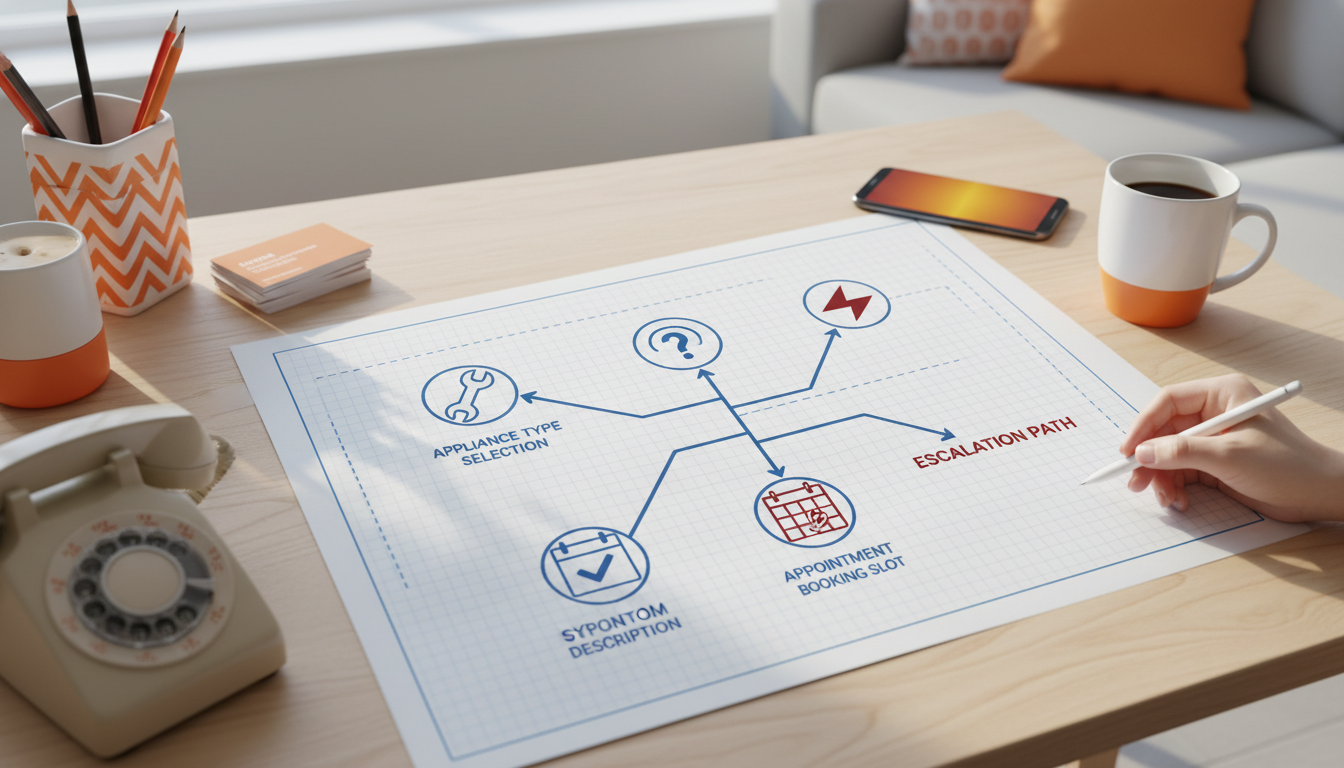
A good AI answering setup has a clean escalation path for all three of these. If yours does not, that is a configuration problem, not a fundamental flaw in the technology.
How do you set up AI answering so it fits an appliance-repair workflow?
Setup quality determines whether this tool helps or frustrates your customers. Here is what actually matters.
- Train it on your service area and appliance types. If you do not work on commercial dishwashers or certain luxury brands, the system needs to know that so it does not book jobs you will have to cancel.
- Connect it to your actual calendar. AI answering that offers phantom availability and then requires a manual confirmation call has not solved your problem.
- Write clear escalation triggers. List the call types that always go to a human: upset customers, commercial accounts, anything involving a manufacturer warranty claim.
- Record and review calls weekly at first. The first 30 days will surface gaps in your script and in how the AI handles edge cases. Fix them before they cost you customers.
- Tell callers upfront. A simple "You have reached ABC Appliance Repair. Our assistant will gather your information and get you scheduled" sets expectations and reduces friction.
For a deeper look at how the intake and booking flow works end to end, see how it works.
Is there a real ROI case for a small appliance-repair shop?
The math is qualitative but the direction is clear. If your shop misses calls after 5 PM and on weekends, and competitors in your market answer those calls, you are losing jobs you never knew you had a shot at. AI answering recaptures those opportunities at a flat monthly cost rather than an hourly labor cost.
The ROI calculation for your shop comes down to three questions: How many calls do you miss per week? What is your average ticket value? And how many of those missed calls would have converted to paid jobs if someone had answered? If you want help working through that for your specific situation, start with a discovery conversation.
Note
What should appliance-repair shops do before signing up for AI answering?
Before you commit to any system, audit your current call handling for one week. Count missed calls, listen to a sample of voicemails, and note how many callers left a number versus hung up. That baseline tells you whether the problem is big enough to solve now and gives you a number to measure against later.
Also check that the AI answering provider you are considering integrates with the scheduling tool you actually use. ServiceTitan, Housecall Pro, and similar field service platforms have varying integration depth with AI voice tools. Confirm before you buy, not after.
For a practical walkthrough of what to ask vendors, the Small Business Administration's guide to evaluating software vendors covers due-diligence principles that apply here.
When you are ready to see what a configured system looks like for your shop, contact us here.
See what this looks like for your shop.
The AI Phone Guy answers every call, qualifies the lead, books the job, and texts you the details, day and night. Book a quick discovery call and we will walk through your numbers together.