
September 16, 2026 · Michael Rodriguez
Is AI Phone Answering a Good Fit for a Roofing Company?
Honest breakdown of whether AI phone answering makes sense for roofing contractors, including what it handles well and where it falls short.
The short answer
Definition
AI Phone Answering: A software system that answers inbound calls using a voice-based AI, gathers caller information, qualifies the lead, and either books an appointment or routes the call to a human, without putting the caller on hold or sending them to voicemail.
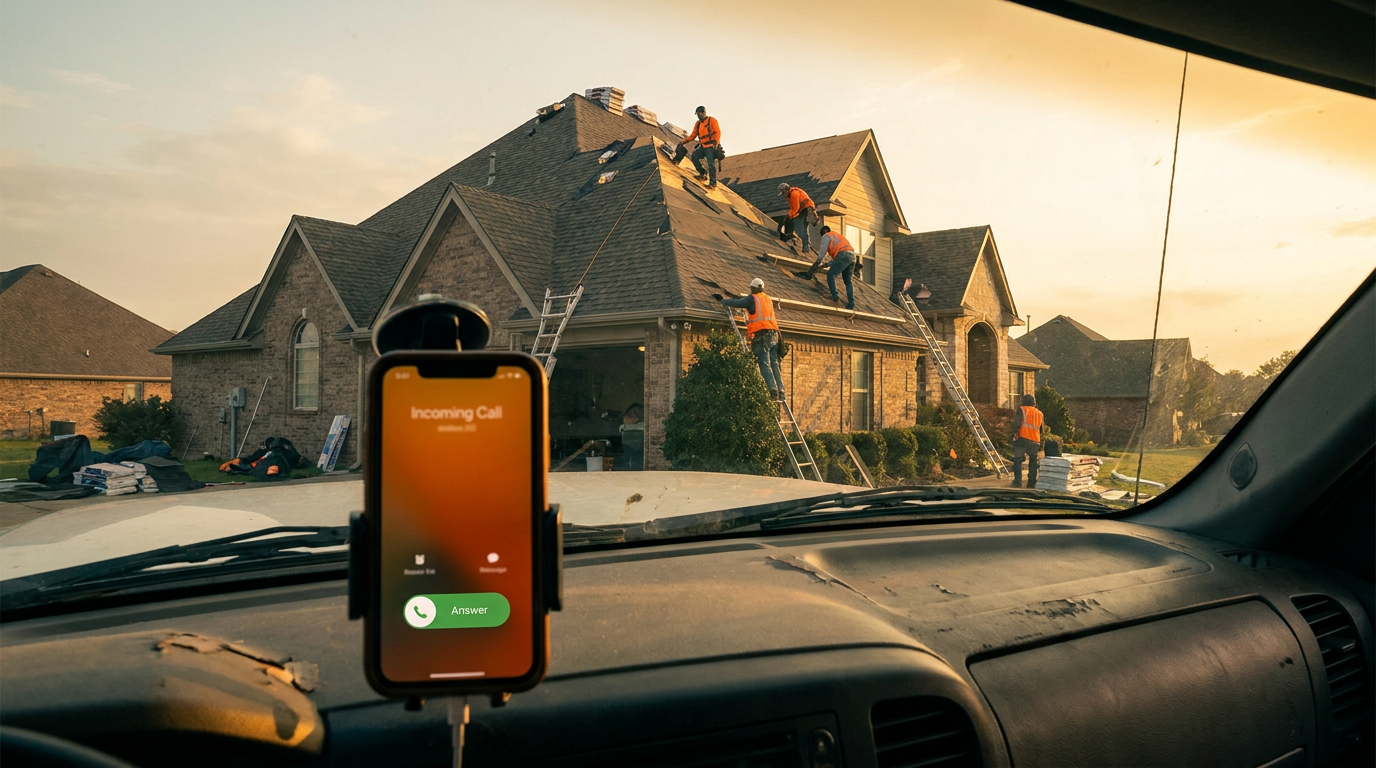
Roofing is a high-stakes, seasonal, weather-driven business. A hailstorm rolls through on a Tuesday afternoon and your phone rings forty times while your crew is on a ladder and your office manager is already on two other lines. That is the exact moment you lose leads to the competitor who picked up. AI phone answering was built for exactly that gap.
But not every tool fits every trade. Let us look at this honestly.
Why do roofing companies miss so many inbound calls?
They miss calls because the work is loud, physical, and pulls everyone away from a desk. A crew chief on a steep pitch is not answering his cell. An owner running three jobs is not available at 7 p.m. when a homeowner finally gets home from work and notices their shingles are gone.
According to research published by Invoca, the majority of home-service callers who reach voicemail do not leave a message and move on to the next result. That is a paid lead, an organic ranking, or a referral walking straight to your competitor.
Note
What call tasks is AI actually good at for a roofing business?
AI handles structured, repeatable conversations well. For roofing, that covers more ground than most owners expect.
Where AI performs reliably:
- Answering calls after hours and on weekends
- Collecting name, address, and a description of the damage
- Asking qualifying questions such as whether the caller owns the home and whether they have already filed an insurance claim
- Booking a free inspection directly into your calendar
- Sending a confirmation text or email immediately after the call
- Handling the volume spike after a local storm without any extra staffing cost
- Fielding basic questions about service area, what to expect from an inspection, and approximate timeline
Where a human still wins:
- A caller who is mid-crisis, emotional about major storm damage, and needs reassurance
- A detailed insurance adjuster conversation
- A commercial property manager with a complex multi-building bid
- Any caller who refuses to engage with an automated system and demands a person immediately
A well-configured AI can detect frustration and transfer the call live, so the last three scenarios do not end in a lost lead. The transfer has to be set up correctly, but that is a configuration decision, not a fundamental flaw in the technology.
How does AI phone answering handle the insurance angle in roofing?
Insurance work is the dominant revenue driver for many residential roofers. Callers on the insurance path often have questions about the claims process, what a public adjuster does, and whether you work with their carrier.
AI can handle the first layer of that conversation: confirming you work with insurance claims, explaining you will review the scope during the inspection, and booking the appointment. It should not try to give claims advice or quote coverage decisions. That is the human estimator's job at the appointment.
The goal of the AI call is not to close the job. It is to get a qualified homeowner on the calendar before they dial the next roofer on their list.
If you script the AI to stay in its lane, collect the right information, and book the inspection, the insurance conversation resolves itself at the appointment level where it belongs.

What does the setup actually require from a roofing owner?
This is where a lot of contractors stall. Setup is not as heavy as it sounds, but it does require your input on a few things.
You will need to define:
- Your service area by city or zip code so the AI can confirm coverage before booking
- The questions you want asked on every call (damage type, homeowner status, insurance claim filed or not)
- Your inspection calendar availability and how far out you are booking
- Your after-hours and overflow transfer protocol
- Any services you do and do not offer (new construction, commercial, gutters, siding)
Most roofing-focused AI phone platforms can be configured and live within a few days. You are not writing code. You are answering a setup questionnaire and reviewing a call script.
See how the intake process works on our how it works page.
Is AI phone answering cost-effective for a roofing company?
The math is straightforward. One roofing job in a typical residential market covers the cost of most AI answering services for an entire year. The question is not whether the tool pays for itself. The question is whether you are disciplined enough to actually follow up on every lead it captures.
AI answering creates a log of every call, every contact, and every booked appointment. That data is more than an answering service provides. It lets you see where leads are coming from, what questions callers ask most, and whether your team is closing the inspections that get booked.
Note
For a detailed look at how pricing and features stack up, the Google Business Profile Help Center is worth reviewing alongside your lead sources since your call volume and conversion rate depend heavily on how well your profile is optimized.
What should a roofing company look for when choosing an AI answering tool?
Not all platforms are built for the trade. Generic virtual receptionist services handle law firms and medical offices fine, but they often do not understand the language of roofing intake.
Look for these features specifically:
- Roofing-specific or home-service-specific intake scripts out of the box
- Bilingual capability if your market has a significant Spanish-speaking population
- Live transfer when a caller escalates or requests a human
- SMS confirmation sent to the homeowner after booking
- CRM or calendar integration with tools you already use
- Call recording and transcription so you can review and improve the script
- Storm surge mode that handles elevated call volume without degrading performance
Explore what a purpose-built intake system looks like at our discovery page or reach out directly at contact to see how it maps to your current call volume.
Bottom line: should your roofing company use AI phone answering?
If you are missing calls after hours, losing leads during busy seasons, or relying on voicemail as your backup plan, then yes, AI phone answering is worth deploying. It is not a magic solution and it requires a real setup investment of time upfront. But for the top-of-funnel job of capturing and qualifying roofing leads before they dial the next contractor, it is one of the most practical tools available to a small or mid-sized roofing operation right now.
See what this looks like for your shop.
The AI Phone Guy answers every call, qualifies the lead, books the job, and texts you the details, day and night. Book a quick discovery call and we will walk through your numbers together.