
August 24, 2026 · Michael Rodriguez
AI Phone Answering vs a Call Center: Which Is Right for a Trade Shop?
Weighing AI phone answering against a call center for your trade business? Here is a plain-talk breakdown of cost, quality, and fit.
The short answer
Definition
AI Phone Answering: A software-driven system that answers inbound calls, qualifies leads, books appointments, and routes urgent calls using voice AI, without a human agent on the other end of the line.
Every trade shop owner has been there: you are up a ladder, your phone rings, you miss it, and the caller books your competitor. The fix used to be hiring a call center. Now there is a second option, AI phone answering, and the two work very differently. This post lays out exactly what each one does, what it costs in plain terms, and which situations call for which tool.
What does each option actually do?
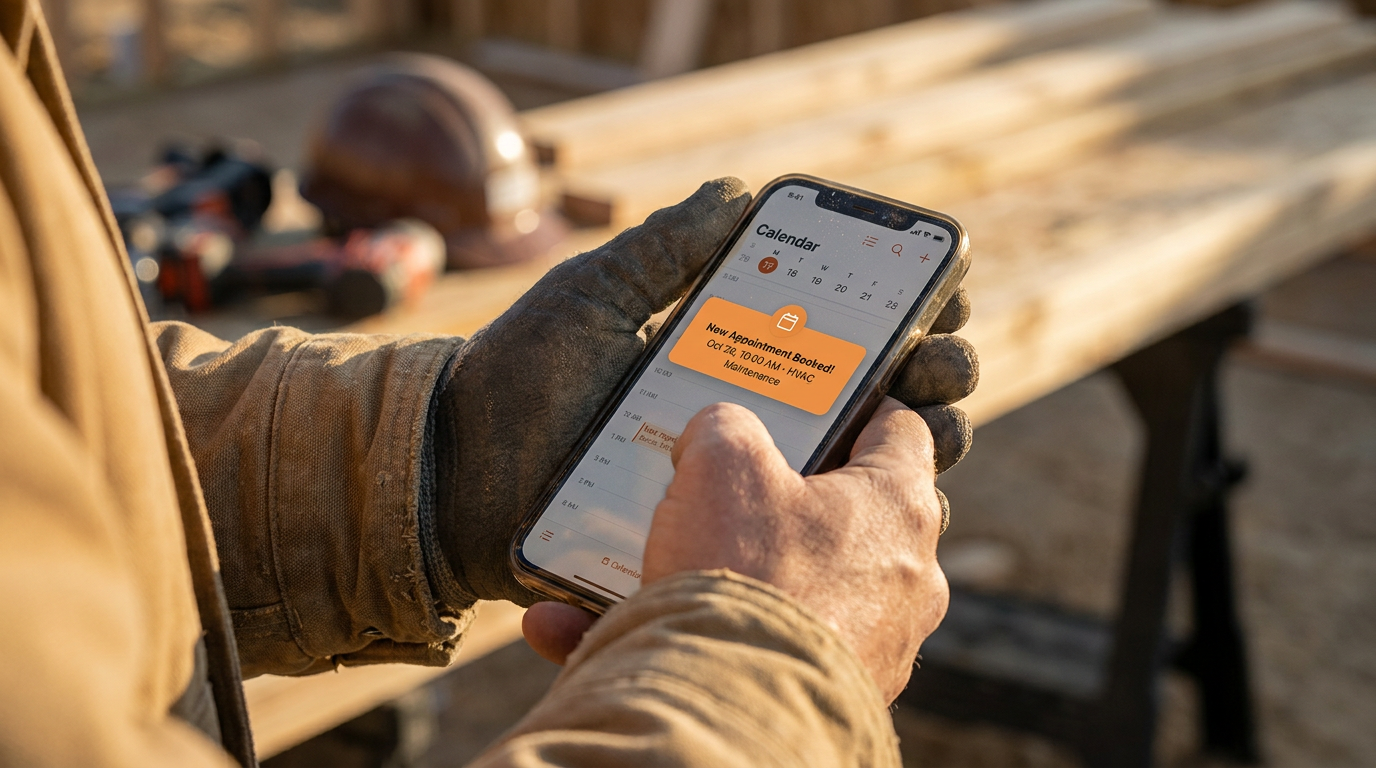
AI phone answering picks up every call instantly, asks the right qualifying questions, checks your calendar, and books the job, all without a person involved. A call center puts a live agent on the line who reads from a script, takes a message, or tries to book based on whatever info you have given them ahead of time.
The core difference is not quality in the abstract. It is consistency versus adaptability. AI does the same thing the same way every single time, at 2 a.m. on a Sunday the same as Monday at noon. A call center agent can go off-script when a customer says something unexpected, which is a real advantage on complicated service calls.
How do the costs compare for a small trade shop?
AI answering services typically run on a monthly subscription and cost considerably less per call than a live-agent center. Call centers generally charge either a per-minute rate or a per-call rate, and those numbers add up fast once your volume climbs past a few hundred calls a month.
Note
Here is a side-by-side look at the main decision points:
| Factor | AI Phone Answering | Live Call Center |
|---|---|---|
| After-hours coverage | Always on, no extra fee | Usually available, costs more |
| Setup time | Hours to a few days | Days to weeks |
| Script flexibility | You configure it once | Agent follows your brief |
| Complex call handling | Limited, routes to you | Agent can ask follow-ups |
| Per-call cost | Low, flat monthly fee typical | Higher, scales with volume |
| Consistent tone | Identical every call | Varies by agent |
| Integration with booking software | Built-in for most platforms | Depends on vendor |
Does AI answering actually convert callers into booked jobs?
The short answer is yes, when the job type is straightforward. AI handles bread-and-butter bookings, drain cleanings, tune-ups, estimates for standard work, very well. It asks the same qualifying questions every time and never has a bad day.
Where it falls short is when a caller is confused, upset, or describing a situation that does not fit neatly into your service categories. A homeowner who says "I think it might be the water heater but I am not sure" needs a human who can ask a few more questions and still close the call with confidence.
AI is a reliable first line, not a complete replacement for judgment on jobs where the scope is unclear before the truck rolls.
For high-ticket work, custom remodels, full HVAC replacements, or anything requiring a site visit before pricing, a live agent who can build a little rapport and handle objections will often convert better than AI alone.
What call types are best suited to AI vs a live agent?
Think about your own call mix. Most trade shops get a predictable set of inbound call types and only a handful require real human judgment.
AI handles these well:
- New customer booking for a standard service
- Appointment confirmations and reschedules
- After-hours intake for non-emergency work
- Basic FAQ calls, pricing ranges, service area questions
- Routing urgent calls to an on-call tech
Live agents add value here:
- Callers with multi-part or unusual problems
- High-value commercial accounts where relationship matters
- Upset customers who need de-escalation
- Calls that require real-time judgment calls on scheduling

What about after-hours and overflow calls?
This is where AI phone answering earns its keep most clearly. After-hours coverage from a call center costs more, and the quality of late-night agents varies. AI does not have a shift change, does not call in sick, and does not charge you time-and-a-half for a Sunday call.
For trade shops that get emergency calls, a well-configured AI system can triage the call, capture the details, and ring your on-call tech immediately for true emergencies while queuing everything else for morning follow-up. That is a workflow that a call center can replicate, but it requires tight coordination and usually a higher service tier.
Note
See how this fits into a broader lead-handling workflow on our how it works page.
How hard is it to switch or combine both?
The practical answer is that many trade shops use both. AI handles the volume, and a call center or in-house CSR handles the escalations. This hybrid model is worth considering if your call mix includes a meaningful share of complex or high-value inquiries.
Switching from one to the other is not a massive lift, but it does require updating your Google Business Profile, your website click-to-call number, and any advertising that lists a direct phone number. That is a half-day task, not a project.
If you want to understand what your current call-capture rate actually looks like before you make any changes, start with our discovery process. Most shops are surprised how many calls go unanswered during peak hours.
For further reading on how AI voice tools are being adopted in field service businesses, the team at Jobber has published practical guidance on automating customer communications that is worth a look.
Which option is right for your shop right now?
If your average job is under a few hundred dollars and your callers mostly just need to book a standard service, AI phone answering will almost certainly pay for itself within the first month and perform more consistently than a call center at the same price point.
If you run a shop where the average ticket is high, the scope is often unclear on the first call, and your customers expect a little conversation before they commit, a live call center or a trained in-house CSR will convert better on those specific calls.
The honest answer for most trade shops is to start with AI, watch where it falls short, and add human backup only for the call types that genuinely need it. You can reach out here if you want a plain-talk walk-through of what that setup looks like for your business.
See what this looks like for your shop.
The AI Phone Guy answers every call, qualifies the lead, books the job, and texts you the details, day and night. Book a quick discovery call and we will walk through your numbers together.