August 28, 2026 · Michael Rodriguez
Does an AI Answering Service Sound Like a Robot to My Customers?
Find out how modern AI answering services actually sound on the phone and what that means for your home-service business reputation.
The short answer
Definition
AI Answering Service: A software system that answers inbound calls using a voice-based large language model, handles common questions, books appointments, and routes urgent calls to a human, all without a live agent on the line for every interaction.
If you run a plumbing, HVAC, electrical, or landscaping company, you have heard the pitch: replace your voicemail or your after-hours answering service with an AI. Your first question is usually the same one every owner asks. Will my customers feel like they are talking to a machine? It is a fair concern and worth a straight answer.
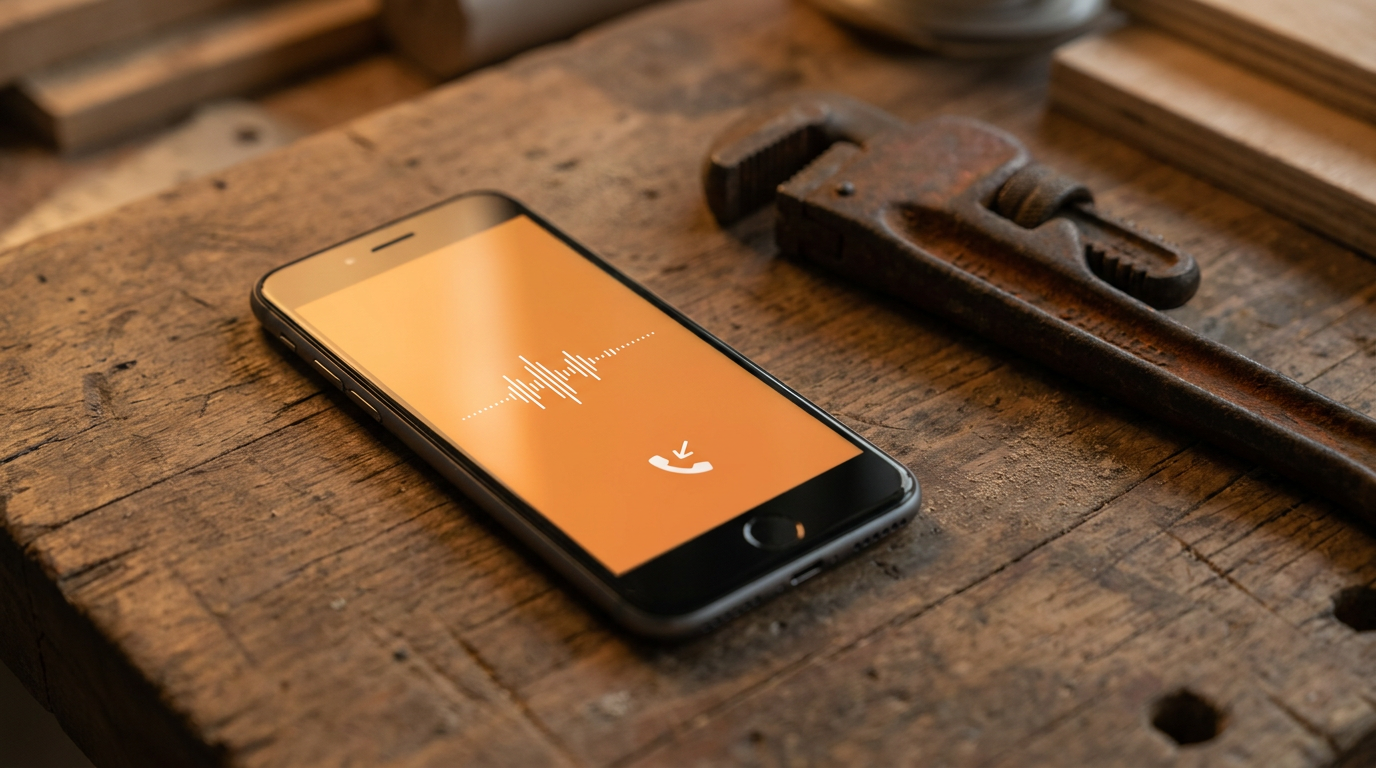
How do modern AI voices actually sound on a call?
They sound close to human, especially on structured conversations like booking an appointment or confirming an address. The technology behind this is called neural text-to-speech, and companies like Google, Microsoft, and ElevenLabs have published research showing how these models are trained on thousands of hours of real human speech. The cadence, the small pauses, the slight variation in pitch, all of it is modeled to feel natural.
Where callers sometimes notice a difference is in truly open-ended conversation, someone who wants to talk through a complicated problem or who veers off a predictable script. A well-configured AI system handles this by recognizing when it is out of its depth and transferring the call to a human or taking a detailed message. That handoff, done cleanly, protects your reputation far better than a voicemail box that fills up overnight.
The question is not whether AI sounds perfect. The question is whether it sounds better than a missed call or a full voicemail box at 9 p.m. on a Sunday.
What do customers actually notice on a service call?
Research from conversational AI firms and telecom analysts consistently points to the same friction points that bother callers:
- Long hold times
- Repeating themselves to multiple agents
- Calling back because no one answered the first time
- Not getting a confirmed appointment time before they hang up
An AI that answers in two rings, collects the job address, confirms a booking window, and sends a text confirmation addresses every one of those pain points. Whether the voice was generated by software or spoken by a person in a call center is usually not top of mind for someone who just had a pipe burst.
Note
Does transparency matter? Should I tell customers they are talking to AI?
Yes, and increasingly it is not just a courtesy, it is a legal consideration. Several U.S. states have passed or are advancing legislation that requires businesses to disclose when a customer is interacting with an automated system. California's bot disclosure law, for example, already prohibits using automated accounts to deceive people about their non-human nature in certain contexts. The Federal Trade Commission has also signaled ongoing attention to deceptive AI practices.
The practical answer for a home-service owner is simple: a brief, honest opener like "Hi, this is the automated assistant for Riverside Plumbing" sets the right expectation, avoids legal risk, and still books the job. Customers who know they are talking to an AI and still get a confirmed appointment time are not bothered. Customers who feel tricked are.
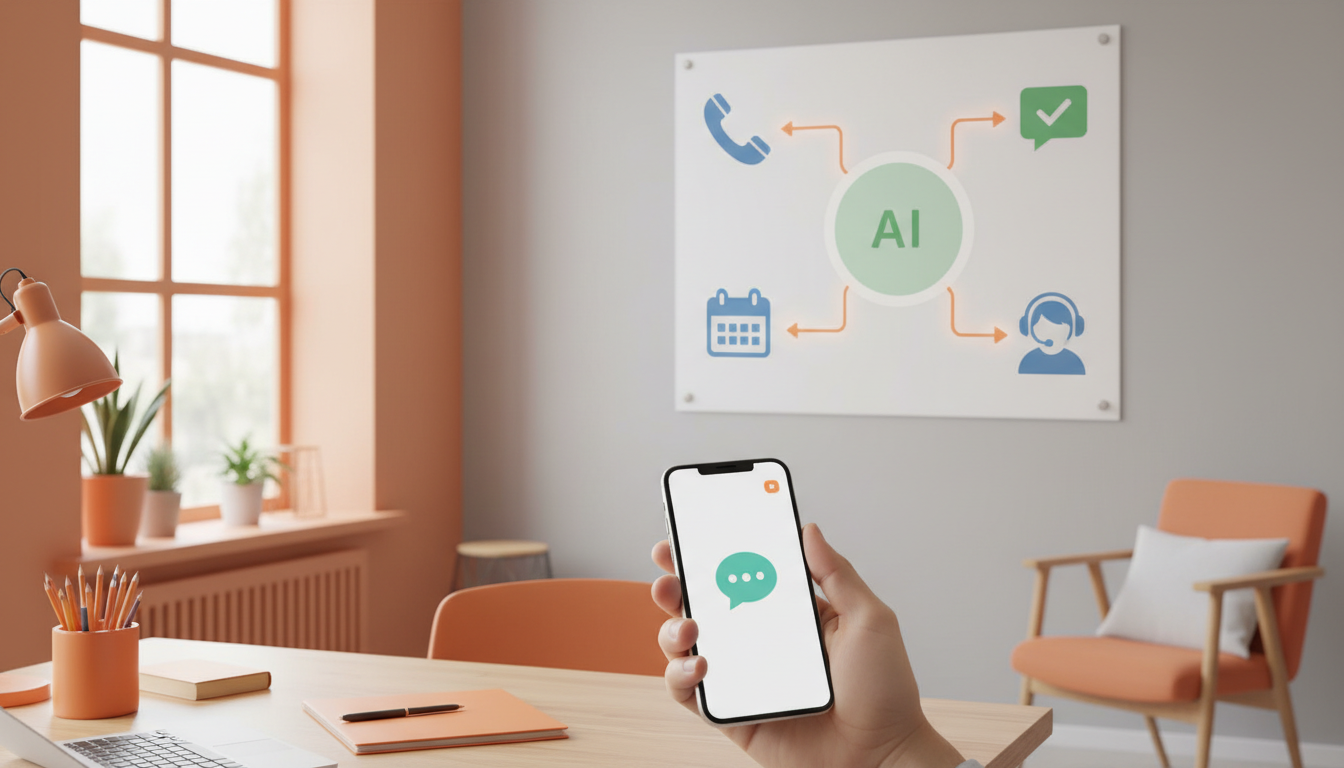
What separates a professional AI setup from a cheap one?
This is where the real quality gap lives. Not all AI answering services are built the same way, and the differences show up in ways customers can hear:
Voice quality -- Low-cost text-to-speech still sounds flat and mechanical. Neural voice models cost more but sound conversational.
Script depth -- A system trained only on generic prompts will stumble on trade-specific language. An AI that knows what a pressure-relief valve is, or can correctly confirm a service zip code, sounds competent.
Latency -- A half-second lag before every response feels unnatural. Well-engineered systems keep latency low enough that the conversation flows.
Fallback handling -- What happens when the AI does not understand? A graceful transfer or message is professional. A loop of "I did not catch that" is not.
Integration with your dispatch system -- An AI that books into your actual scheduling software and sends the customer a confirmation text is doing real work. One that just takes a message and emails it to you is a glorified voicemail.
Learn more about what a professional setup looks like on our how it works page or start by walking through the discovery process to see how it fits your business.
How do I know if an AI answering service is right for my business?
Start by counting the calls you miss. If your shop is losing after-hours calls to a competitor who answers, or if your office line goes to voicemail during job site hours, the math on an AI answering service tends to work quickly. A single recovered HVAC call in peak season can cover months of service cost.
The fit is strongest for businesses where:
- A high share of calls are appointment requests or address confirmations
- After-hours volume is significant
- The owner or technicians are on-site and cannot answer the phone reliably
- Call volume spikes seasonally and hiring temp staff is not practical
The fit is weaker for businesses where almost every call involves a complex, judgment-based conversation that requires trade expertise before a customer will commit. Even then, an AI that triages and routes beats a missed call.
For a plain-language look at whether the numbers work for your shop, visit our contact page and ask for a volume assessment.
Source: Invoca, 2023
External resources worth reading: the FTC's guidance on AI and consumer protection gives a plain-language summary of where the legal lines are, and Google's Speech research page explains how neural voice models are trained if you want to understand the technology behind the voice quality claims.
See what this looks like for your shop.
The AI Phone Guy answers every call, qualifies the lead, books the job, and texts you the details, day and night. Book a quick discovery call and we will walk through your numbers together.