
August 7, 2026 · Michael Rodriguez
The Best Way to Handle Overflow Calls When Your Team Is Slammed
When your phones blow up and your crew is buried, here is exactly how to handle overflow calls without losing jobs or burning out your staff.
The short answer
Definition
Overflow Call: An overflow call is any inbound call that comes in when all available staff are already on the phone, out in the field, or unavailable during after-hours or peak periods. These calls are high-risk because a caller who hangs up on a ring-out rarely calls back.
If you run a home-service business, you already know the feeling. It is a Tuesday morning in early June, temperatures spike, and your HVAC phones light up like a switchboard. Your dispatcher is handling three active jobs, your office manager is invoicing, and the phone just keeps ringing. Every unanswered call is a potential job walking out the door.
This is not a staffing problem, at least not entirely. It is a call-routing problem. And the fix is more systematic than just hiring another person.

Why does missing overflow calls hurt more than you think?
Every missed call is not just a missed job. It is a missed job that often goes straight to a competitor who picked up. Callers in a service emergency, a burst pipe, a dead AC, a sparking outlet, are not patient shoppers. They call the next number on the list.
A caller with a burst pipe does not leave a voicemail and wait. They dial the next plumber before your voicemail tone finishes.
Beyond lost revenue, repeated missed calls damage your reputation. Online reviews regularly mention phone experience, and "could not get anyone on the phone" shows up more often than most owners expect.
Source: Invoca, 2023
What options actually exist for overflow call handling?
There are four practical options, and most well-run small service businesses use a combination of two or three.
1. Live Virtual Receptionist Service Companies like Ruby Receptionists, Smith.ai, or Posh route calls to real humans when your lines are busy. They can qualify leads, schedule appointments using your calendar software, and take messages in a structured format. Cost ranges from roughly 200 dollars to 600 dollars per month depending on call volume. This is the highest-quality overflow option because callers get a live voice.
2. Answering Service with Scripts Older-school answering services use agents who work from a script you provide. Quality varies significantly. The best ones follow your intake questions precisely. The worst ones take a name and number and nothing else. If you go this route, write your own call script and test the service regularly by calling in yourself.
3. Structured Voicemail with Rapid Callback Protocol If budget is tight, a well-set-up voicemail system paired with a hard rule, all messages returned within 30 minutes during business hours, is better than a bad answering service. Record a professional greeting that tells callers exactly what to expect: "You have reached Green Valley Plumbing. We are currently helping another customer. Leave your name, number, and the issue and we will call you back within 30 minutes."
4. Text-Based Follow-Up via Missed Call Auto-Response Many business phone systems, including RingCentral, Grasshopper, and Google Voice for Business, let you automatically send a text to any missed caller. Something simple like: "Hey, this is Green Valley Plumbing. Sorry we missed you. Reply here or call us back at this number. We will get right with you." This catches the caller before they move on.
Note
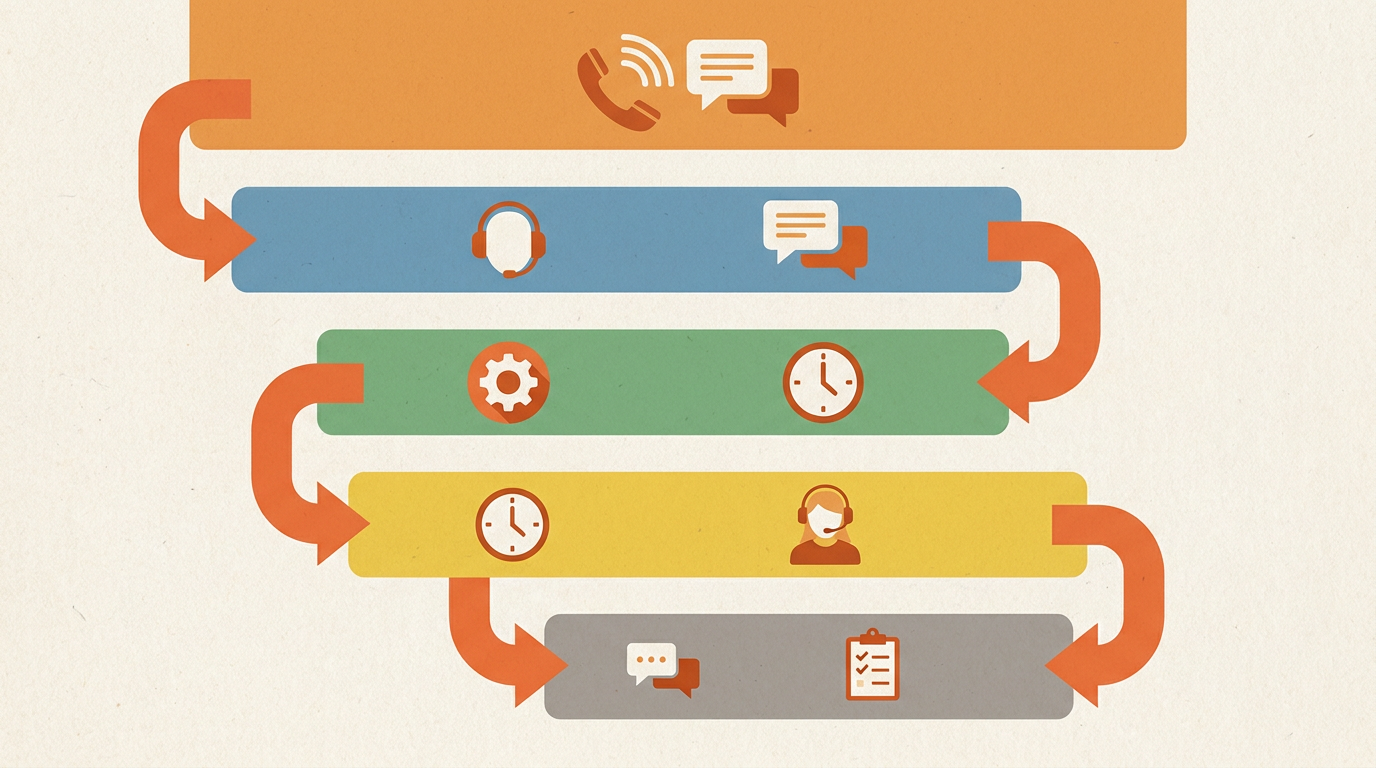
How should you structure your overflow system from first ring to follow-up?
Build it in layers. Each layer catches what the one before it misses.
- Layer 1: Live answer by your team. Always your first preference. Greet, qualify, book.
- Layer 2: Virtual receptionist or answering service. Activates when all staff are occupied. They answer live, follow your script, and push appointments into your calendar.
- Layer 3: Structured voicemail. Catches any call the virtual receptionist cannot reach, typically after-hours overflow.
- Layer 4: Missed-call auto-text. Fires automatically for any call that hits voicemail. Keeps the conversation open.
- Layer 5: Rapid callback queue. Your team works through this list at defined intervals, every 30 minutes during peak, first thing every morning for after-hours messages.
This layered approach means no caller disappears into a void. Every inbound contact gets acknowledged.
What should your call script actually include?
A virtual receptionist or answering service is only as good as the script you give them. A bare minimum script covers these points.
- Caller name and best callback number
- Service address and zip code
- Nature of the issue, specific, not just "plumbing problem"
- Urgency level, is this an emergency or routine?
- How the caller found you, this is useful data for your marketing
- Preferred appointment window
Share this script with your service provider and update it seasonally. An HVAC company should have a different script in July than in October.
Is a virtual receptionist worth the cost for a small team?
For most service businesses doing more than 20 inbound calls per day during peak season, yes. The math is straightforward: if you close one additional job per week that would have otherwise been a missed call, the service typically pays for itself. The value goes up if your average job ticket is higher, think HVAC system replacements, roofing estimates, or whole-home rewiring.
For businesses with fewer calls, the missed-call auto-text plus a rigid callback protocol gets you most of the benefit at almost no cost.
Note
How do you keep overflow handling from slipping during your busiest days?
Systems erode under pressure. The days your overflow plan gets tested hardest are the days it is most likely to get skipped. A few practices keep it running.
Assign ownership. One person is responsible for working the callback queue. Not "everyone." One person.
Set a hard response SLA. 30 minutes during business hours. First thing in the morning for after-hours messages. Post it somewhere visible in your office.
Review missed call data weekly. How many came in. How many got called back. How fast. Make it a standing agenda item in your weekly team check-in.
Test your answering service quarterly. Call in yourself using a different number. See what the experience is like. If it is not good, fix the script or switch providers.
If you want to see how a managed service can handle your inbound communication end-to-end, including overflow, take a look at how it works or go through our quick discovery process to see what fits your call volume. Ready to talk it through? Reach out directly.
For more on building call-handling systems, the team at Smith.ai publishes practical guides aimed at small service businesses that are worth bookmarking.
See what this looks like for your shop.
The AI Phone Guy answers every call, qualifies the lead, books the job, and texts you the details, day and night. Book a quick discovery call and we will walk through your numbers together.