October 7, 2026 · Michael Rodriguez
How Does an AI Receptionist Actually Answer and Book My Calls?
A plain-language breakdown of how AI receptionists handle inbound calls, qualify leads, and fill your calendar without hiring more staff.
The short answer
Definition
AI Receptionist: A software-based call agent that uses large-language-model voice technology to answer inbound phone calls, collect caller information, follow a qualification script, and create bookings in a connected calendar or CRM, without a human operator on the line.
If you run a plumbing, HVAC, landscaping, or any other home-service business, missed calls are missed money. A caller who hits voicemail on a Tuesday night books your competitor by Wednesday morning. An AI receptionist closes that gap by staying live around the clock.
How does the AI actually hear and understand what a caller says?
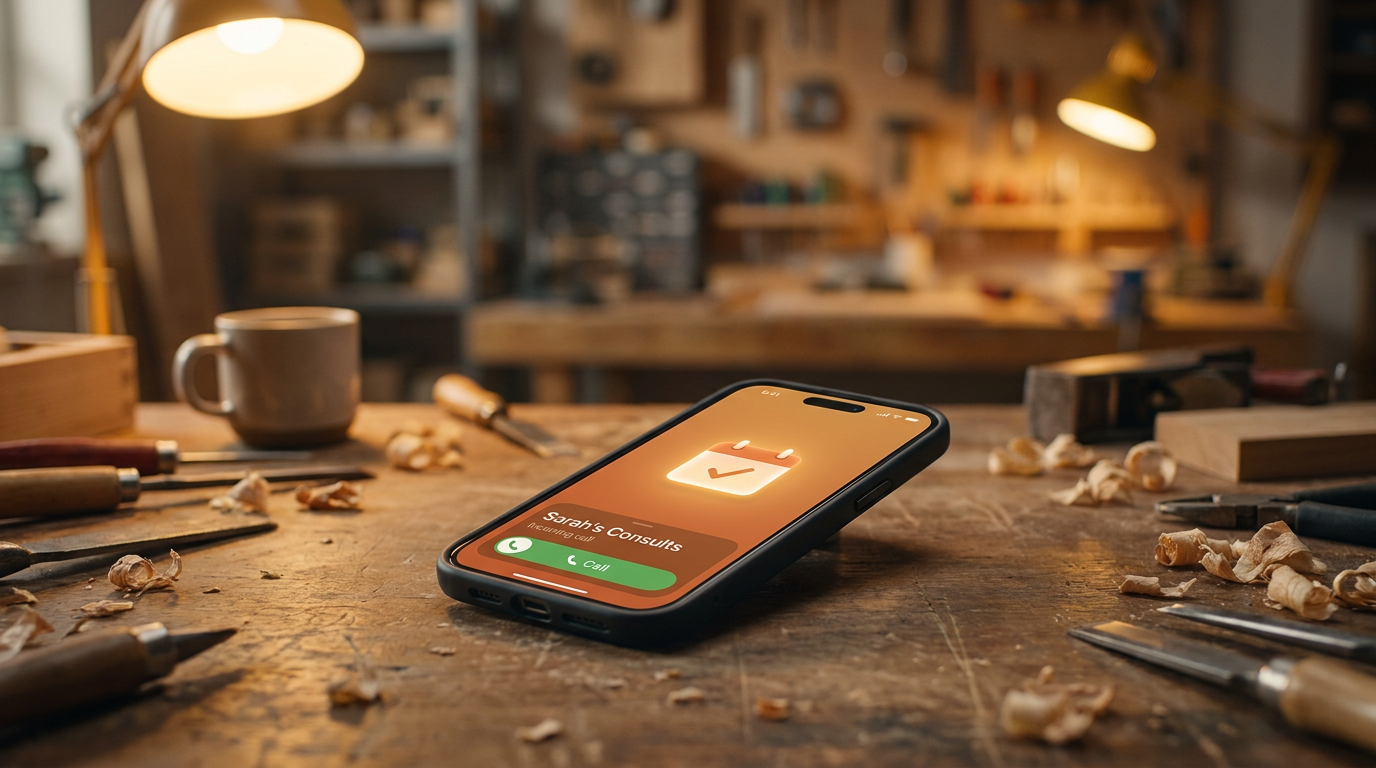
The AI converts the caller's speech to text in real time, then a language model reads that text and decides what the caller wants. It is not matching words to a static menu. It understands context, so when a caller says "my furnace is making a banging noise and my wife is freezing" the system correctly routes that as an urgent HVAC service request, not a general inquiry.
The voice it uses on the other end is synthetic but trained to sound conversational. Most callers, when surveyed after a call, report the experience felt natural. That matters because a robotic, stilted voice causes hang-ups.
Note
What happens step by step when a call comes in?
Here is the typical flow from ring to booked appointment:
- Call arrives at your business number or a forwarded number connected to the AI system.
- Greeting plays with your business name and a natural opening line.
- The AI asks qualifying questions such as service type needed, property address, urgency level, and preferred appointment window.
- Availability is checked in real time against your connected calendar.
- The appointment is created and a confirmation text or email goes to the caller automatically.
- A summary notification lands in your CRM or job management software so your team knows a new booking exists.
- Complex calls escalate to a live person or go to a voicemail with a transcription, depending on how you configure the fallback.
The whole exchange typically takes two to four minutes, roughly the same as a good human receptionist would need.
What integrations make booking actually happen?
The booking step is where owners get skeptical, and rightly so. Saying the AI "books calls" means nothing unless it connects to the tools you already use.
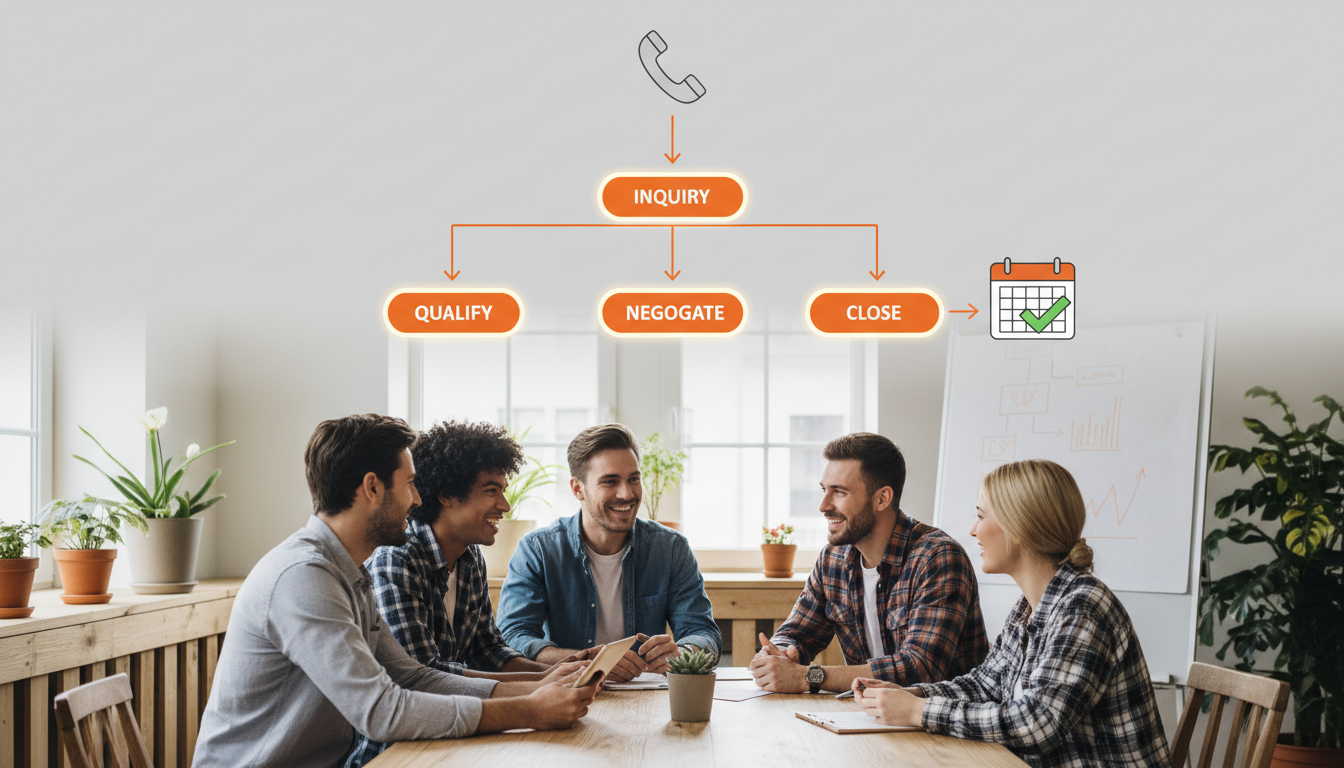
Most AI receptionist platforms integrate with common field-service and scheduling software through direct connectors or through middleware like Zapier. Common integrations include Google Calendar, ServiceTitan, Jobber, Housecall Pro, and similar platforms. When a time slot is confirmed on the call, the AI writes the appointment directly into that system. No human has to copy anything from a notepad.
Booking only sticks when the AI writes directly into the same calendar your techs look at every morning. A confirmation that lives only in the AI system is not a real booking.
Before you sign up with any provider, ask them to show you a live demo of a booking hitting your actual software. If they cannot demo it, the integration is not ready.
Can the AI handle objections, pricing questions, and difficult callers?
It handles common objections and basic pricing questions if those responses are scripted in advance. You control what the AI says when a caller asks "how much does a water heater replacement cost?" You can give it a range, a "depends on the unit" answer, or a redirect to get a free estimate booked.
For genuinely difficult callers, angry customers, or situations requiring real judgment, a well-configured system transfers the call to a live person rather than stumbling through. That handoff logic is part of setup. Think of it as giving your AI a clear lane and a clear exit when the road gets complicated.
Note
How is this different from a phone tree or an answering service?
A phone tree forces callers to press numbers and navigate menus. It does not converse, it does not adapt, and callers hate it. An answering service uses human operators, which costs significantly more per month and introduces inconsistency depending on who picks up.
An AI receptionist sits in the middle: it converses like a human agent but operates at software cost and software scale. It does not get tired at 11 pm. It does not put callers on hold to ask a supervisor. It follows your script precisely every single time.
For a comparison of where this fits in your overall lead capture strategy, see how our discovery process works and the full how-it-works overview.
What do I need to set it up?
Setup requirements are straightforward for most home-service businesses:
- A dedicated or forwarded phone number connected to the AI platform
- Access credentials for your scheduling or CRM software for the integration
- A completed intake script covering your services, service area, and pricing approach
- A fallback number or voicemail destination for edge cases
- A short testing period where you call your own number and walk through scenarios
Most providers can have a basic setup live within a few business days. A thorough, customized setup with real integration testing takes closer to one to two weeks and is worth the extra time.
Is there evidence this actually reduces missed calls and increases bookings?
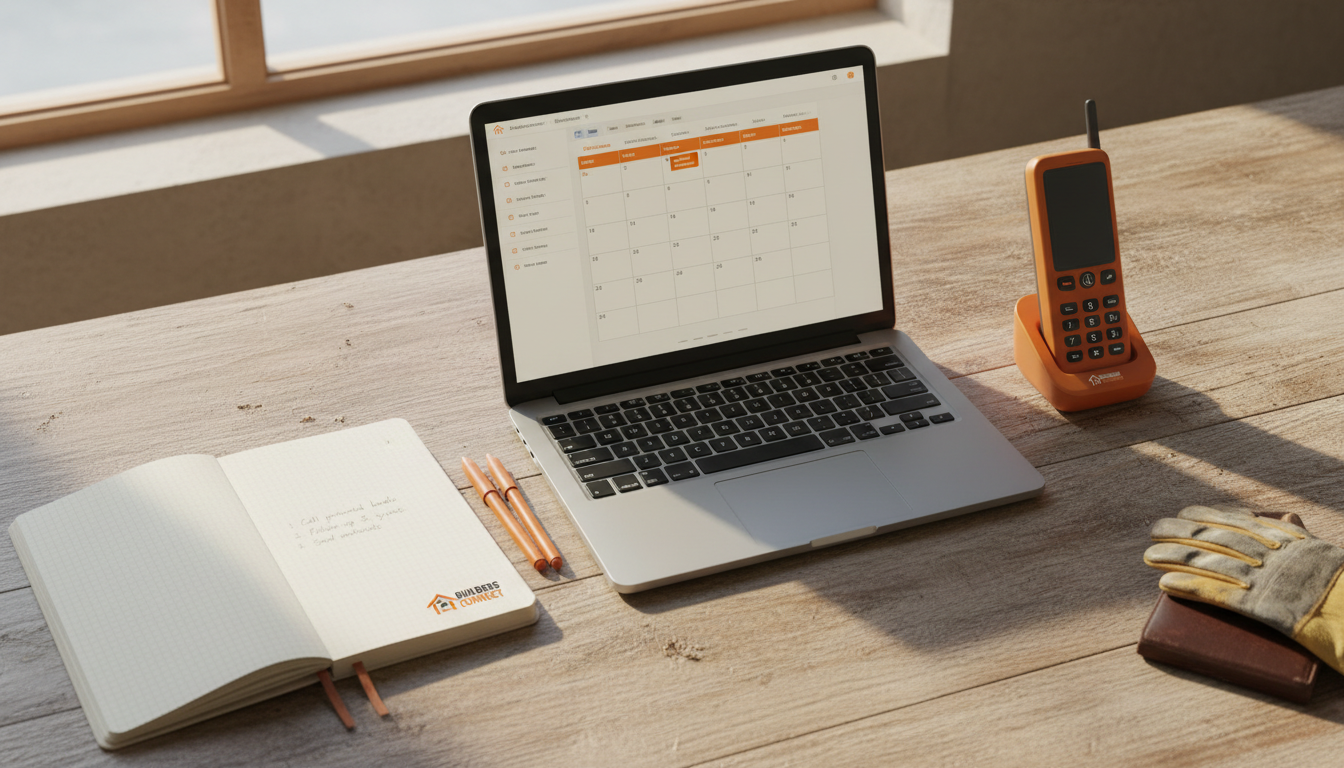
The research picture on AI voice agents in small business is still developing, but the underlying behavior data on missed calls is well established. According to a study published by Google and Ipsos, 60 percent of customers prefer to call a local business directly when they are ready to buy or book. Separately, research from BrightLocal has consistently found that most consumers expect a call to be answered promptly and will move to the next business if it is not. The logic is straightforward: if a call gets answered and a booking gets offered, more bookings happen.
Source: Google and Ipsos, LSA Research
For home-service businesses specifically, after-hours calls represent a large share of total inbound volume because homeowners notice problems in the evening. An AI receptionist captures that volume without paying overtime.
KeyTakeaways
Ready to see how this fits your business specifically? Talk to us and we will walk you through it.
See what this looks like for your shop.
The AI Phone Guy answers every call, qualifies the lead, books the job, and texts you the details, day and night. Book a quick discovery call and we will walk through your numbers together.