
September 23, 2026 · Michael Rodriguez
Can a Landscaping Business Use an AI to Answer and Schedule Calls?
Yes, a landscaping business can use AI to answer and schedule calls. Here is what it actually does, what it costs, and where it still falls short.
The short answer
Definition
AI Answering Agent: A software service that uses large-language-model or voice-recognition technology to hold a real-time phone or chat conversation, collect caller details, check calendar availability, and book or route appointments without a human operator on the line.
Missed calls are lost revenue. A landscaping owner who is running a mower at 2 p.m. cannot pick up the phone, and most callers will not leave a voicemail. They will call the next company on the list. AI answering agents were built specifically to close that gap.
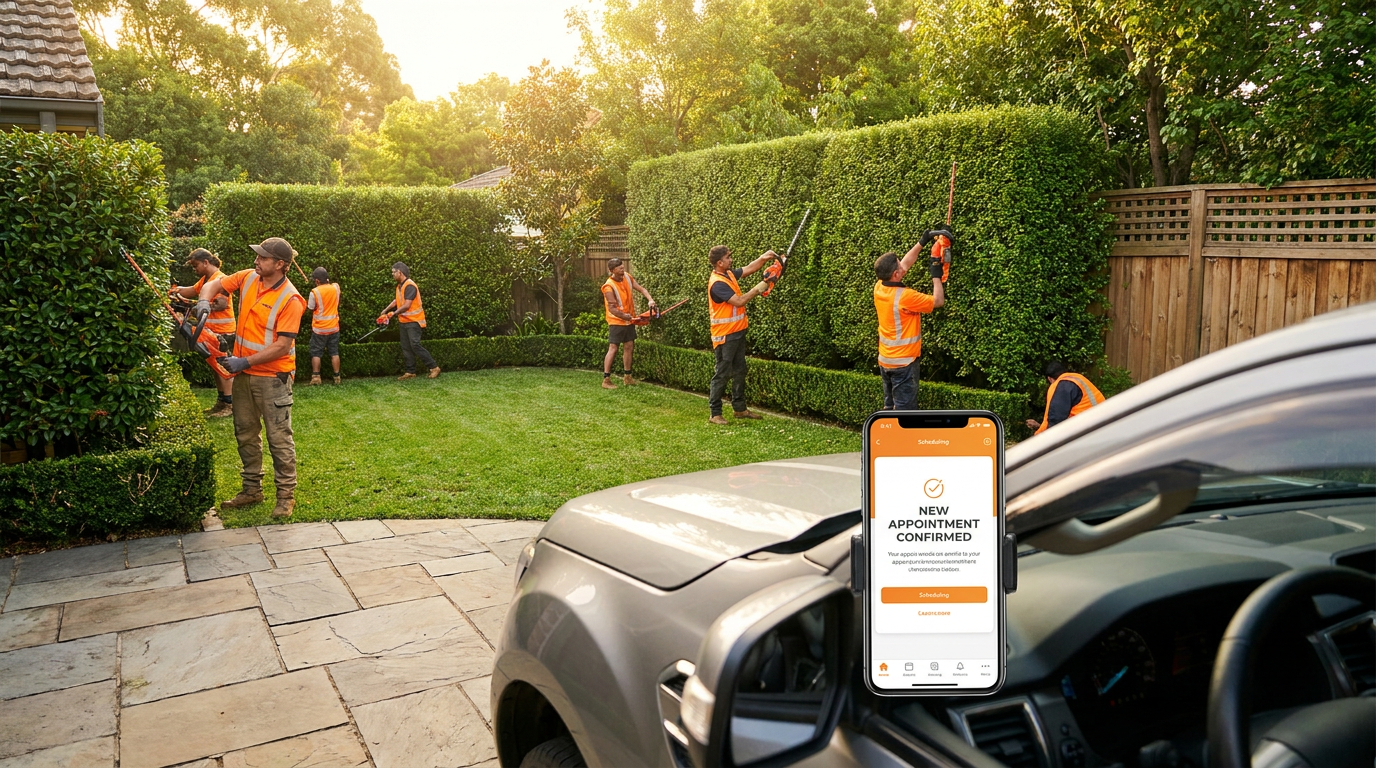
Does AI actually understand landscaping requests?
For most standard requests, yes. Modern AI agents handle a defined set of intents reliably, including requesting a lawn mowing quote, booking a one-time cleanup, asking about service areas, and confirming or rescheduling existing appointments. They collect the address, lot size, service type, and a preferred time slot, then write that information to your calendar or CRM.
Where they still struggle is complex or unusual scope. A caller who wants a full landscape redesign with drainage work, retaining walls, and a planting plan is describing a sales conversation, not a scheduling task. The AI should recognize that and route the call to you rather than try to close it alone.
Note
How does the scheduling part actually work?
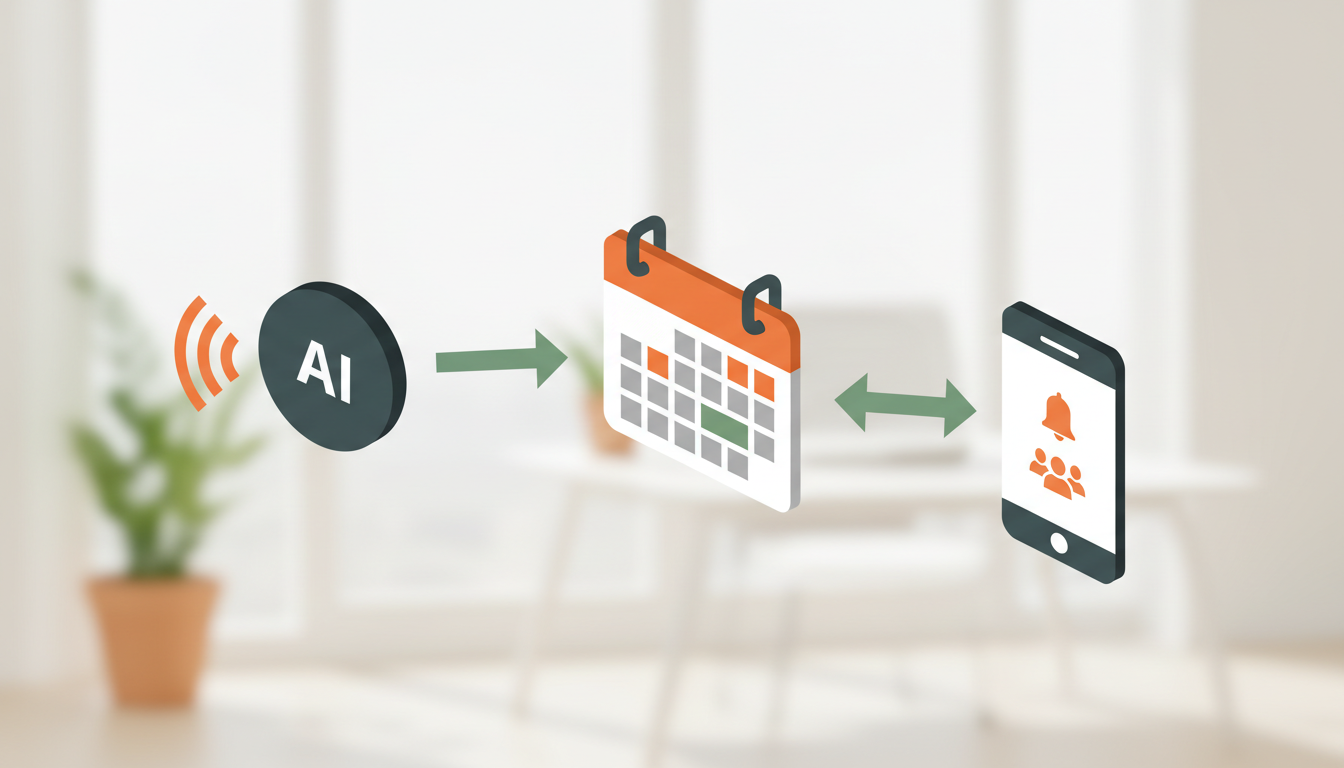
The agent connects to your scheduling software through an integration, reads open time slots in real time, and offers the caller two or three options. When the caller confirms a slot, the agent writes the appointment, sends a confirmation text or email, and can notify the crew lead. Most platforms integrate natively with tools like Jobber, Housecall Pro, or Google Calendar.
The key requirement is that your calendar is accurate and up to date. If your availability data is stale or your crews run on a paper schedule, the agent will book over conflicts. The technology is only as reliable as the data behind it.
What does it cost compared to hiring a receptionist?
Pricing varies by platform and call volume, but AI answering services for small trades businesses typically run somewhere between 200 dollars and 600 dollars per month for a mid-sized operation. A part-time receptionist in most U.S. markets costs considerably more when you factor in wages, payroll taxes, and training time. The AI also works at midnight when a homeowner is planning next weekend's project.
That said, cost alone is not the full picture. A skilled human receptionist can upsell, handle complaints with empathy, and manage edge cases. An AI agent is fast and consistent, but it lacks judgment outside its training. The practical answer for most growing landscaping companies is a hybrid: AI handles volume, a human handles relationship-sensitive calls.
The AI does not replace the human who knows your business. It replaces the voicemail box that was losing you jobs every afternoon.
What information should the AI collect on every call?
A well-configured landscaping AI agent should capture at minimum:
- Full name and callback number
- Service address and zip code
- Type of service requested (mow, cleanup, install, treat, etc.)
- Approximate property size or any known details
- Preferred appointment window
- How they heard about the business
That last point matters. Knowing whether the caller came from a yard sign, a Google search, or a referral feeds your marketing data without requiring manual entry. See how we structure lead intake on our how-it-works page.
Are there compliance or legal issues to know about?
Yes, and this is worth taking seriously. In the United States, the Telephone Consumer Protection Act (TCPA) governs automated calls and texts. If your AI agent places outbound calls or sends follow-up texts, you need documented consent from the recipient. Inbound calls are lower risk because the consumer initiated contact, but you should still disclose that an AI is handling the call. The Federal Trade Commission has issued guidance on AI disclosure in consumer-facing interactions, which you can review at ftc.gov.
Beyond federal rules, some states have their own disclosure requirements. A single sentence at the start of the call, something like "You have reached Green Valley Landscaping. Our virtual assistant will help you schedule service today," satisfies most requirements and sets caller expectations clearly.
Note
How do you know if it is working?
Track four numbers every month:
- Total inbound calls handled by AI versus transferred to a human
- Booking conversion rate for AI-handled calls (appointments booked divided by calls answered)
- Abandonment rate (callers who hung up before completing a task)
- Revenue attributed to AI-booked jobs
If your abandonment rate is high, the script is probably asking too many questions or the voice quality is off-putting. If conversion is low, the agent may be routing too many calls to voicemail instead of booking. Both problems are fixable through configuration, not by scrapping the system.
Learn how to connect AI call handling to your full business growth setup at our discovery page.
What landscaping businesses are the best fit for this?
The businesses that get the most out of AI call answering tend to share a few traits. They already have consistent service offerings and defined service areas. They are fielding more than 20 to 30 inbound calls per week. They have a digital calendar that reflects real availability. And they are losing jobs to missed or slow-answered calls, which is common once a crew hits two or three trucks.
Solo operators who handle every call personally and have low inbound volume may not see enough return to justify the setup time. But for any operation that is growing past that one-person stage, the math usually works out quickly.
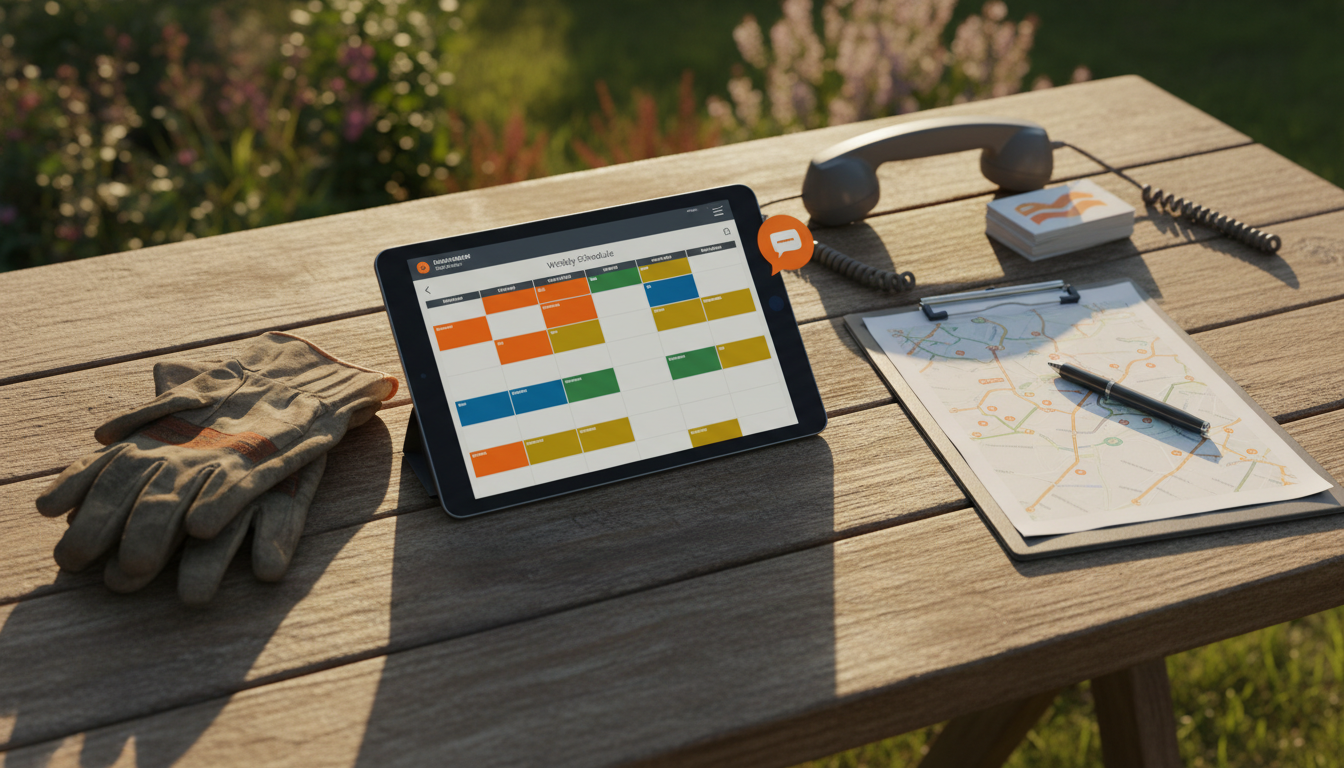
For a deeper look at what the implementation process looks like, the team at Jobber publishes practical guides on connecting automation tools to field service workflows.
See what this looks like for your shop.
The AI Phone Guy answers every call, qualifies the lead, books the job, and texts you the details, day and night. Book a quick discovery call and we will walk through your numbers together.