October 12, 2026 · Michael Rodriguez
Will an AI Phone Answering Service Sound Natural to My Customers?
Honest breakdown of how AI phone answering works, where it sounds natural, and where it still falls short for home-service businesses.
The short answer
Definition
AI Phone Answering Service: A software system that answers inbound calls using a large-language-model brain paired with text-to-speech voice synthesis, handling caller questions and booking tasks without a human picking up the phone.
If you run a plumbing, HVAC, electrical, or cleaning business, missed calls are missed revenue. You already know that. The pitch for AI answering is simple: never miss a call, never pay overtime, never have a grumpy receptionist answer on a bad day. What nobody tells you upfront is the honest story about voice quality, conversation flow, and the situations where the tech still stumbles.
This post gives you that honest story.
How does AI voice technology actually work on a phone call?
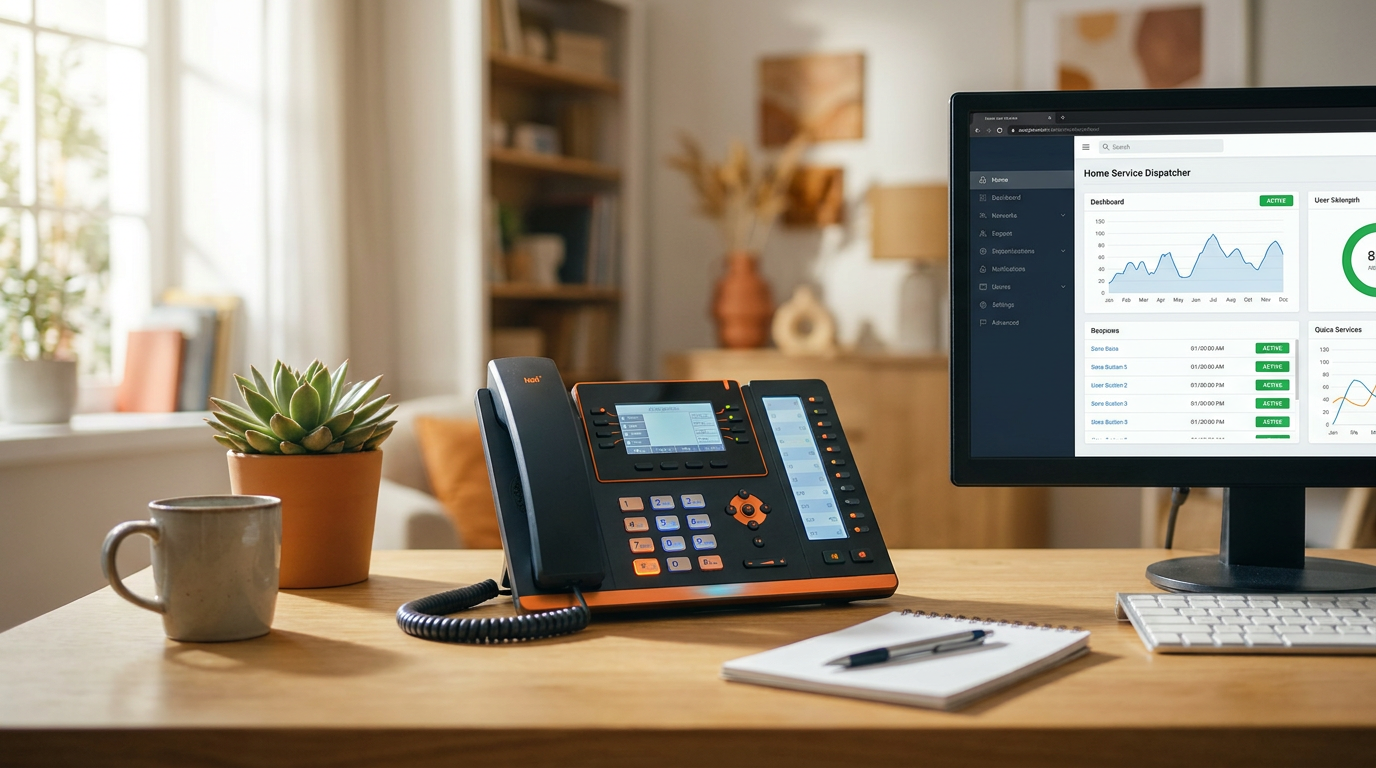
The AI listens to the caller using speech-to-text, runs the words through a language model to figure out intent, then replies using a text-to-speech engine trained on thousands of hours of human speech. The whole loop takes under a second on a good connection. Today's leading voice engines from companies like ElevenLabs and OpenAI produce output that sounds noticeably more human than the robotic IVR trees callers suffered through a decade ago. Pitch, pacing, and natural filler sounds have all improved substantially.
The robotic phone tree your customers hated in 2015 is not the technology you are evaluating today.
The main variables that affect how natural a call sounds are: the quality of the underlying voice model, how well the AI was trained on your specific service offerings, and how stable the caller's phone connection is. A compressed cell signal introduces artifacts that make any voice, human or AI, sound worse.
What kinds of calls go smoothly with AI answering?
AI handles high-volume, structured calls well. Specifically:
- Appointment booking: caller gives name, address, service needed, preferred time. AI confirms and logs it.
- After-hours intake: capturing a lead at 10 pm when your office is closed.
- Basic FAQ: service area questions, pricing tiers, what to expect on a first visit.
- Callback scheduling: caller leaves details and AI sets an expectation for when a tech will call back.
- Repeat customer recognition: if the system has call history, it can greet a returning customer by name.
These call types are predictable. The caller has a clear goal, the AI has a clear script of possibilities, and the conversation stays on rails. In those situations, natural-sounding voice plus competent intent-matching equals a caller who gets what they called for without friction.
Note
Where does AI answering still fall short?
Honesty matters here. There are situations where AI answering creates friction instead of removing it.
Emotionally charged calls. A homeowner who just flooded their kitchen is not in a structured, patient mindset. They want reassurance from a human voice. An AI that stays calm and clinical can feel tone-deaf even if the words are technically correct.
Heavy regional accents or background noise. Speech-to-text accuracy drops when callers have strong accents or are calling from a noisy job site. Misheard words lead to wrong responses and caller frustration.
Complex troubleshooting. "My furnace is making a clicking noise but only when it first kicks on and it smells a little like burning" is not a booking script. If your callers regularly need to describe problems in detail before they can even book, the AI needs a robust handoff path to a human.
Callers who figure it out and resent it. Some people dislike talking to a machine on principle. They will not say so directly; they will just hang up and call a competitor. This segment exists, and it is worth knowing whether your customer base skews toward or away from tech comfort.

How should you set up AI answering so it sounds credible?
The voice model is only part of the equation. Setup quality matters just as much.
Use a voice that matches your brand region. A Southern HVAC company using a generic generic mid-Atlantic accent creates subtle mismatch. Most platforms let you choose or tune the voice.
Write your greeting to be transparent without being off-putting. Something like "Hi, this is the answering service for Riverside Plumbing, I can get you booked or take a message" is honest without announcing "you are talking to a robot." Customers care about getting helped; they care less about the mechanism than you might expect.
Build a clean escalation path. Any call the AI cannot resolve confidently should transfer to a live person or go to a callback queue. An AI that tries to handle everything and fails badly is worse than one that hands off gracefully.
Review transcripts weekly. Every call gets logged. Reading through the ones that went sideways tells you exactly what to fix in your call scripts. This is the fastest way to improve naturalness because it targets real friction, not hypothetical friction.
Does the research say customers accept AI on service calls?
The honest answer is that published data on home-service callers specifically is thin. What the broader customer experience research does show is that caller satisfaction correlates most strongly with whether the call resolved their problem, not whether a human or machine handled it. Salesforce's State of the Connected Customer report consistently finds that fast resolution outranks channel preference for most service interactions. The implication: an AI that books the appointment cleanly wins over a human who puts the caller on hold for four minutes.
Source: Salesforce, State of the Connected Customer 5th Edition
Speed and resolution are what callers actually remember. Natural voice is the threshold requirement, not the final goal.
What should you do before committing to an AI answering service?
Before you sign a contract, run through this checklist:
- Call the demo line yourself and call it again from a noisy environment.
- Ask the vendor for a sample transcript of a call that did not go well and how the system handled it.
- Confirm whether the platform records and transcribes every call so you can audit quality.
- Find out how long onboarding takes to get the AI trained on your services, pricing, and service area.
- Check whether there is a live transfer option for after-hours emergencies.
If a vendor cannot answer those questions clearly, that tells you something about their product.
Want to see how an AI answering system would fit your specific call volume? Start with our discovery process to map out where the gaps are. Or if you want to understand the full picture of how the system works end-to-end, see how it works here. Ready to talk specifics, reach out directly.
For a broader look at how AI handles customer conversations, the team at MIT Technology Review has covered voice AI advances in plain language worth reading.
The bottom line
AI phone answering sounds natural enough on routine home-service calls today. The technology is not perfect, and there are caller situations where it will still frustrate people. The businesses that get the most out of it treat setup and ongoing tuning as real work, not a one-time install. Set it up right, build in a good handoff, and audit your transcripts. That is the practical path to AI answering that actually serves your customers well.
See what this looks like for your shop.
The AI Phone Guy answers every call, qualifies the lead, books the job, and texts you the details, day and night. Book a quick discovery call and we will walk through your numbers together.